Steam Room Sanitation for a Cleaner Home Ritual
A home steam room should feel like a place to return to warmth, not another surface on your maintenance list. Yet steam room sanitation is what preserves that feeling: clean tile beneath bare feet, clear glass, fresh air, and a space that is ready when your body needs recovery. The goal is not harsh, constant disinfecting. It is a thoughtful rhythm of cleaning, drying, and inspection that respects both the room's materials and the ritual it supports.
Because a steam room is warm and humid by design, moisture management matters as much as the cleaner you choose. Residual water, body oils, product residue, and poor airflow can create the conditions that lead to odors, surface film, mildew, and drain issues. A few intentional habits after each session will do more for the long-term condition of your retreat than an occasional aggressive scrub.
Steam Room Sanitation Starts After Every Session
Begin once the steam room has cooled enough to clean comfortably and safely. Remove towels, robes, bath mats, and any accessories that have collected moisture. Leaving damp textiles inside the room is an easy way to trap humidity after the session is over.
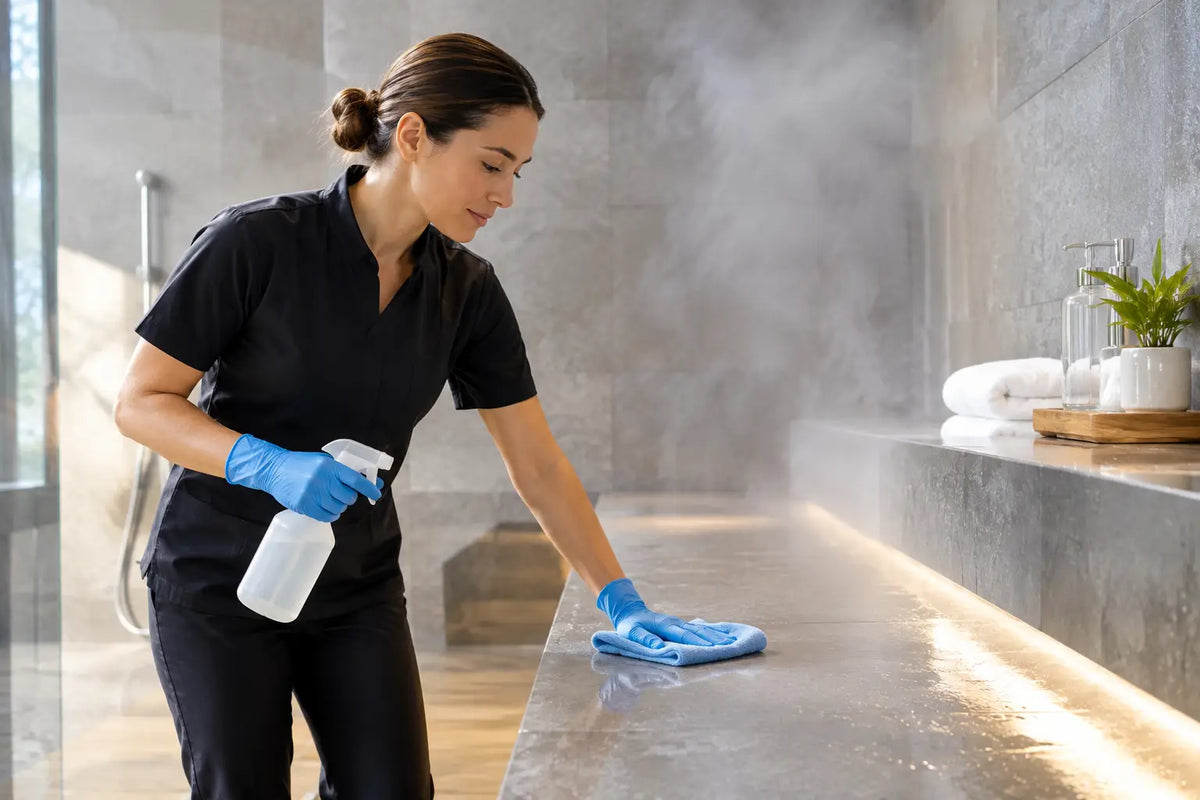
Use a soft microfiber cloth or squeegee to move condensation from glass, walls, seating, and the floor toward the drain. This is especially worthwhile on benches, grout lines, corners, and the lower edge of the door, where water tends to linger. You do not need to turn this into a lengthy chore. Two or three minutes of attention can significantly reduce the moisture load left in the room.
Then allow the room to dry. Run the exhaust fan if your installation includes one, and leave the door open or slightly ajar according to the manufacturer's guidance. The right approach depends on your ventilation design. Some systems are engineered to exhaust moisture efficiently with the door closed; others benefit from additional passive airflow. The result you want is simple: surfaces should dry fully between uses.
If you use aromatherapy oils, body scrubs, or hair products during your steam ritual, wipe down the areas where residue is likely to settle. Oils can leave a nearly invisible film that attracts dust and dulls tile or glass over time. A clean steam room feels more luxurious because it is cared for before buildup has a chance to become visible.
A Weekly Steam Room Sanitation Routine
A weekly clean keeps ordinary moisture from becoming a larger maintenance issue. Start with a cleaner approved for the materials in your room, whether that is porcelain tile, ceramic tile, natural stone, acrylic, glass, or sealed wood accents. A pH-neutral, nonabrasive cleaner is often the most versatile choice, but the product manual and your installer should always have the final word.
Apply the cleaner to a soft cloth or non-scratch sponge rather than saturating every surface. Clean the benches, walls, floor, door handles, controls, glass, and the interior side of the door. Give particular attention to areas touched frequently by hands and feet. Rinse any cleaner away thoroughly if the instructions call for it, then dry the surfaces with a fresh towel or microfiber cloth.
Care for grout, seals, and glass
Grout and silicone seals deserve a close look each week. These are practical details, but they have an outsized effect on how fresh and polished the room feels. Look for discoloration, cracking, separation, or persistent dark spots around corners and joints. Addressing a small issue early is far easier than waiting for moisture to travel behind finished surfaces.
For glass doors, use a gentle cleaner made for shower glass or the specific glass treatment in your installation. Avoid abrasive pads, which can scratch the surface and make future cleaning more difficult. If mineral spotting is a regular concern, drying the glass after each use is usually more effective than relying on stronger products later.
Keep the drain clear and odor-free
The drain is one of the most overlooked parts of steam room sanitation. Hair, soap residue, oils, and mineral deposits can slow drainage and create unpleasant odors. Remove visible debris weekly and clean the drain cover according to its design. If water begins to pool, drains slowly, or carries a persistent smell, do not cover the issue with fragrance. It may be time for a plumber or qualified installer to inspect the drain and trap.
Choose Cleaning Products With Care
More powerful is not always better in a premium home wellness space. Harsh acids, abrasive powders, and bleach-based products can damage natural stone, discolor grout, dull metal fixtures, or degrade seals. Never mix cleaning products, particularly bleach and ammonia-based formulas, as the resulting fumes can be dangerous.
Disinfectants have a place when someone in the household is ill, when a surface has been contaminated, or when the product instructions for your equipment call for one. For regular care, cleaning and drying are generally the foundation. If you choose a disinfectant, verify that it is appropriate for the surface, follow its required contact time, ventilate the area well, and rinse if directed. A product cannot do its job if it is wiped away immediately, and leaving chemical residue where skin will rest is equally unhelpful.
Natural stone requires particular restraint. Vinegar and acidic cleaners are often suggested as household shortcuts, but they can etch marble, limestone, travertine, and other calcareous stone. When your steam room includes stone, use a stone-safe cleaner and consult the sealer or installer recommendations before trying a new product.
Manage Water Quality and the Steam Generator
The visible room is only one part of sanitation. Your steam generator needs routine care too, especially in areas with hard water. Mineral scale can reduce performance, affect steam quality, and shorten the life of components if it is allowed to accumulate.
Follow the generator manufacturer's schedule for flushing or descaling. The correct frequency depends on your local water hardness, how often you use the steam room, and whether your system has an automatic flush feature. A household that enjoys steam several times a week may need more frequent attention than a room used occasionally. Do not improvise with descaling chemicals unless they are explicitly approved for your unit.
This is also a good moment to check the steam head and control panel. The steam head should be unobstructed, clean, and secure. Controls should remain dry on the exterior and respond normally. If steam output changes suddenly, a warning code appears, or you notice water where it should not be, schedule service rather than continuing to use the room.
A Monthly Check Protects the Whole Retreat
Once a month, take ten quiet minutes to inspect the space with a more critical eye. Check the ceiling corners, door frame, ventilation grille, bench undersides, and edges of the floor. Notice whether the room is drying as quickly as it once did. A new musty scent, recurring mildew, peeling caulk, or condensation outside the steam room can point to an airflow or sealing issue that deserves professional attention.
Wash reusable accessories such as headrests, buckets, or removable mats according to their material instructions, and replace any item that remains odorous after cleaning. Keep the room itself uncluttered. Fewer products and textiles left inside mean fewer places for moisture to hide.
For homeowners designing or upgrading a wellness space, sanitation should be part of the conversation from the beginning. Proper ventilation, sloped surfaces, accessible drains, durable finishes, and a correctly sized steam generator make maintenance easier long after installation day. This is the kind of practical planning that allows a beautiful room to remain restorative rather than demanding.
WellNest Home believes a home wellness ritual should support your life, not create more friction within it. Treat your steam room as you would a favorite linen robe or a thoughtfully prepared bath: with consistent, uncomplicated care. When the room is dry, clean, and quietly maintained, stepping inside becomes easier to choose, and returning to warmth feels exactly as it should.