7 Best Recovery Tools for Busy Professionals
A full calendar rarely announces when your body needs care. It shows up in the tightness across your shoulders after back-to-back calls, the heavy legs after an early workout, or the restless mind that follows you from your desk into bed. The best recovery tools for busy professionals do not demand another appointment or a dramatic change to your routine. They create a reliable place to return to - often in as little as 10 to 30 minutes - when you need to reset.
For people balancing careers, families, training, and travel, recovery is less about doing everything perfectly and more about creating repeatable rituals. The right home wellness investment should fit your space, support the outcome you want most, and feel inviting enough to use consistently.
What Makes a Recovery Tool Worth Your Time?
A premium recovery tool should earn its footprint in your home. Before considering features, begin with the moment you want to improve. Do you need to soften the physical tension that accumulates throughout the workday? Support post-exercise recovery? Create a calmer transition into sleep? Or build a morning ritual that helps you awaken with more clarity?
The most effective setup is rarely the one with the longest list of modalities. It is the one you can reach without friction. A sauna near your primary bath may become an evening ritual. A red light panel in a home office can make a midday reset realistic. A cold plunge on a covered patio may suit someone who thrives on a focused, energizing morning practice.
Clinical context matters, too. Recovery tools can support relaxation, circulation, muscle comfort, and general well-being, but they are not substitutes for medical care. Anyone with a medical condition, pregnancy, cardiovascular concerns, sensitivity to heat or cold, or questions about light exposure should speak with a qualified clinician before beginning a new practice.
The Best Recovery Tools for Busy Professionals
1. Infrared saunas for a quiet return to warmth
An infrared sauna is a natural choice for professionals whose days are defined by mental load, muscle tension, and little time outdoors. Its gentle radiant heat can create a cocooning experience that encourages relaxation and helps ease the feeling of post-workout or desk-bound stiffness. For many homeowners, it becomes an intentional boundary between the workday and the evening.
Infrared models are often appealing because they can operate at lower ambient temperatures than traditional saunas, which some people find more comfortable for regular use. A 20-minute session while listening to calming music, reading, or simply sitting without a screen can feel more restorative than trying to squeeze in another errand.
The trade-off is sensory preference. If you crave the enveloping heat and ritual of a classic sauna, infrared may feel subtler. Consider available electrical capacity, indoor placement, and the number of people who will use it before choosing a cabin size.
2. Traditional or steam saunas for a deeper heat ritual
Traditional and steam saunas offer a more immersive heat experience, making them especially compelling for those who view recovery as a full sensory ritual. The warmth, scent of natural wood, and slower pace invite you to put the day down. For active households, a larger sauna can also turn individual recovery into a shared wind-down practice.
A traditional sauna uses heated stones, often with water poured over them to produce a wave of steam. A steam sauna creates humid heat with a steam generator. Both can feel deeply comforting, but their installation requirements differ. Traditional units may require dedicated electrical planning, while steam environments demand careful attention to waterproofing, ventilation, and materials.
Choose this category when you have room to build a lasting wellness space and genuinely enjoy heat. It is a high-consideration investment, but one that can transform an unused room, primary bathroom, or backyard into a sanctuary with purpose.
3. Cold plunge tubs for focused morning clarity
Cold water immersion is not for everyone, but for the person who responds well to a crisp, structured ritual, a cold plunge can be remarkably compelling. The experience asks for presence. A few minutes in cool water can create an unmistakable shift from scattered to alert, which is why many professionals place this practice at the beginning of the day.
A home cold plunge is most practical when it includes dependable temperature control and filtration. A chiller helps maintain consistent water conditions without the daily work of buying ice, making the ritual far easier to sustain. For outdoor use, think beyond the tub itself: privacy, weather exposure, drainage, electrical access, and a safe non-slip path back indoors all shape the experience.
The trade-off is intensity. Cold exposure is not a universal recovery prescription, and timing may matter for dedicated strength trainees. If your priority is relaxation before bed, heat may be the better first investment. If you want a bracing morning practice that feels mentally clarifying, a cold plunge may be the piece you use most.
4. Red light therapy panels for efficient, targeted sessions
Red light therapy panels are among the easiest tools to integrate into a demanding schedule because sessions are typically brief and require no change of clothes, cleanup, or recovery room. A well-placed panel can support a consistent morning or evening practice in a bedroom, gym, or private office.
People often choose red light therapy to support skin appearance, muscle recovery, and general wellness. The appeal is its simplicity: stand or sit at the recommended distance, follow the manufacturer’s guidance, and let the session become a quiet pause rather than another task to optimize.
Panel size is the key decision. A smaller device can work well for localized use and compact spaces. A larger panel offers broader coverage and can be more efficient for full-body routines. Eye protection and appropriate use are essential, particularly for those with eye conditions or photosensitivity concerns.
5. Recovery accessories for the days you need immediate relief
Not every recovery need calls for a room-scale installation. Thoughtfully chosen accessories can bring comfort to the spaces where tension actually appears: a home office, bedside table, gym corner, or travel bag. These are especially useful for professionals who need practical support between larger rituals.
Consider the physical patterns you notice most often. A supportive massage tool can help you attend to tight calves, feet, or upper back after long periods of sitting. Heat-based accessories can create a soothing evening cue. Mobility tools may help you move more comfortably before a workout or after a long flight.
Accessories are best used as support, not punishment. The goal is not to aggressively work through every sore spot. It is to notice what your body is asking for and respond with a few calm, consistent minutes of care.
6. Aromatherapy for a stronger ritual cue
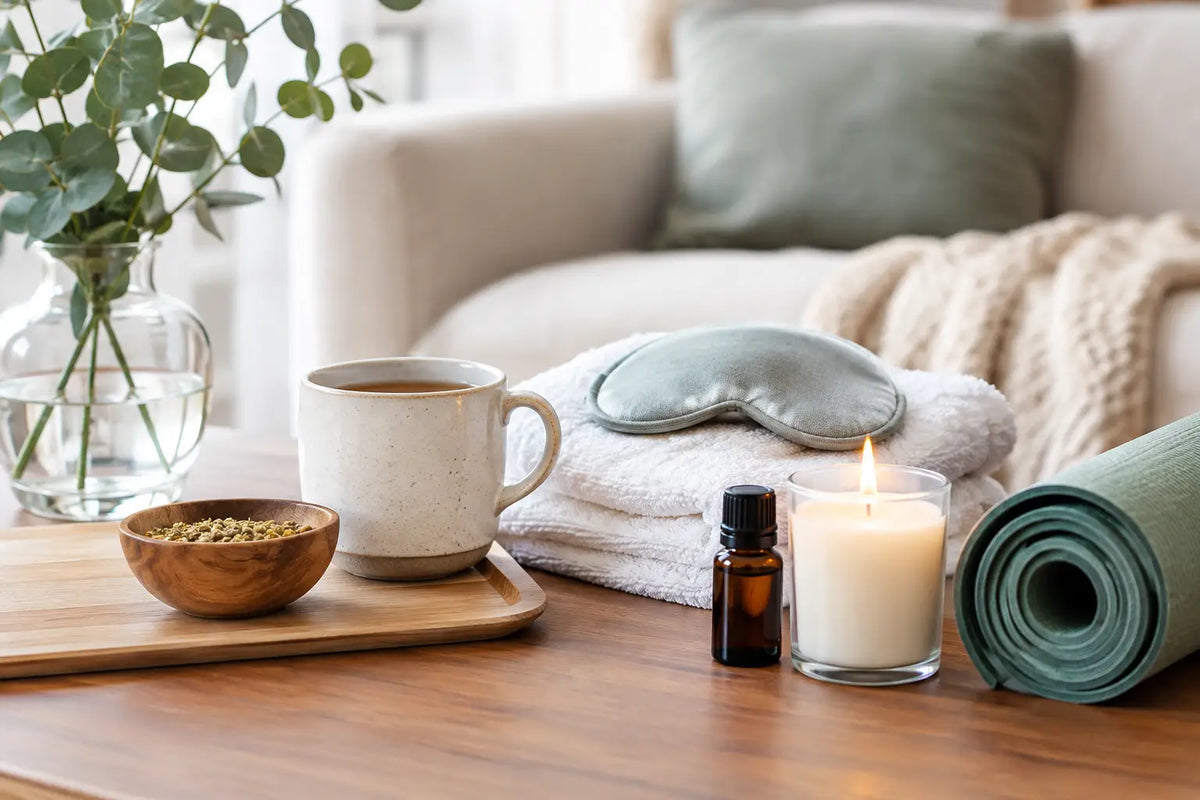
Scent can change the character of a room quickly. In a recovery space, aromatherapy helps create a sensory signal that the day is shifting. Eucalyptus can feel fresh and spa-like in a heat ritual, while softer botanical scents may suit a slower nighttime routine.
This category works beautifully alongside a sauna, bath, or quiet stretching practice because it makes the experience feel more intentional without adding time. Choose quality products and use them as directed, particularly around pets, children, and sensitive individuals. The right scent should be present but never overpowering.
7. A recovery space that removes decision fatigue
The most overlooked tool is the environment itself. A dedicated corner with soft lighting, towels within reach, water nearby, and a place to sit can make recovery feel available rather than aspirational. You do not need a sprawling home spa to benefit from this approach. You need a space that asks little of you when your energy is low.
For a complete home ritual, pair modalities according to the rhythm of your life. A red light session before work, a brief cold plunge on select mornings, or a sauna session after training can each stand alone. On slower evenings, heat followed by hydration, gentle mobility, and a few minutes away from your phone can become a more expansive reset.
How to Choose Your First Investment
Start with the friction point that appears most often. Choose a sauna if tension and stress are your daily companions and warmth is what makes you exhale. Choose a cold plunge if you want a deliberate morning ritual and have the appetite for intensity. Choose red light therapy if convenience is the deciding factor and you want a low-effort practice you can repeat often.
Then consider permanence. An accessory or compact panel offers flexibility for renters or frequent movers. A sauna or plunge is a meaningful home upgrade that deserves thoughtful planning around location, utility requirements, maintenance, and design. At WellNest Home, this kind of decision is best approached as a long-term ritual, not an impulse purchase.
The most valuable recovery tool is the one that meets you on an ordinary Wednesday, when your shoulders are high, your attention is scattered, and you have only a small window to yourself. Make that window feel cared for, and it can change the tone of everything that follows.