

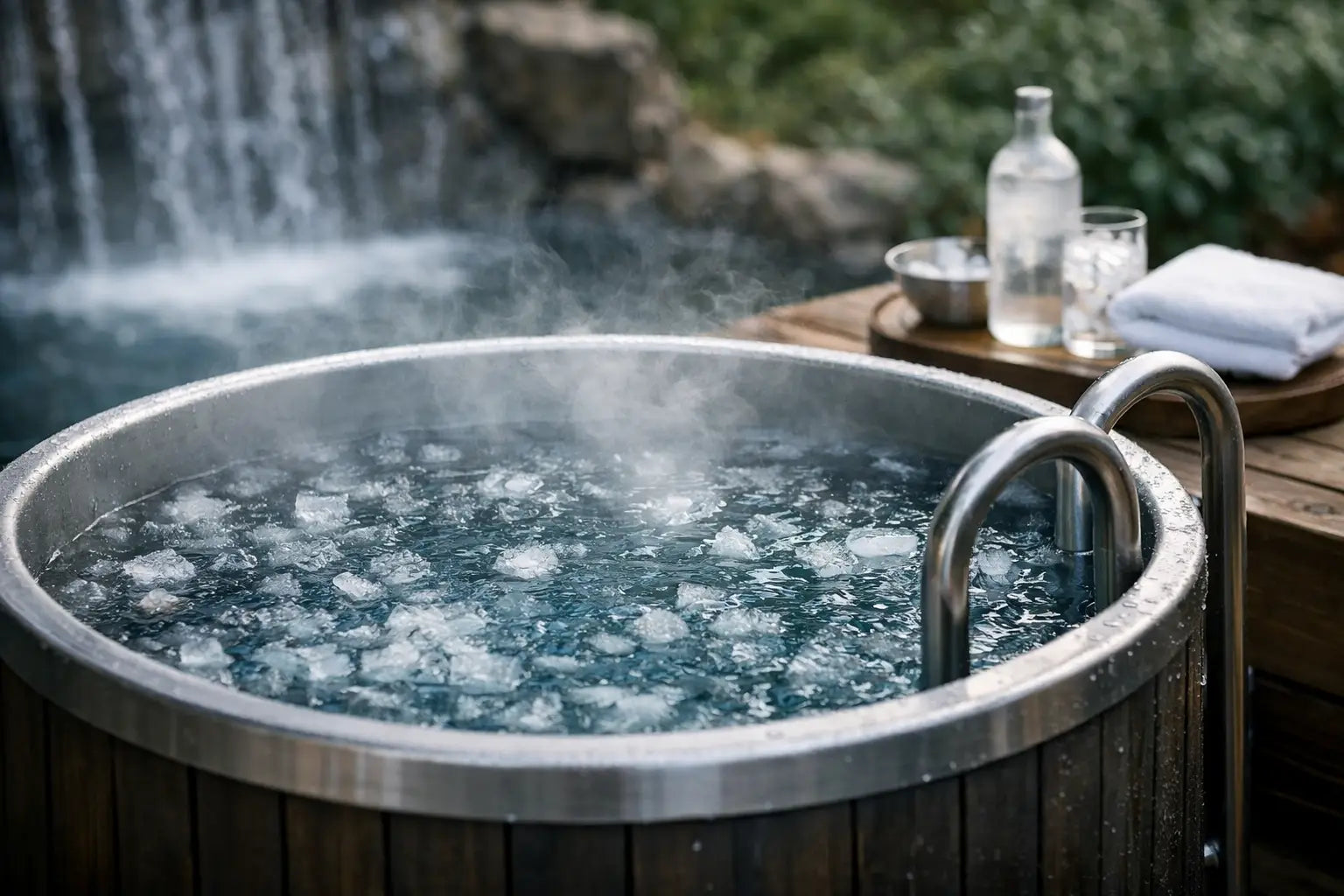
How Cold Should a Plunge Tub Be?

The first time you step into a plunge tub, the number on the display suddenly feels very personal. What looks manageable at 50 degrees can feel bracing in a way that completely changes your breathing, your focus, and your willingness to stay in. So if you are asking how cold should a plunge tub be, the honest answer is not “as cold as possible.” It is cold enough to create a meaningful response, but not so cold that the experience becomes chaotic, unsafe, or impossible to sustain as a ritual.
For most people, the sweet spot is between 45 and 55 degrees Fahrenheit. That range is cold enough to stimulate the body, support recovery, and create the crisp mental reset many people want from a plunge, while still being approachable enough to use consistently. But your ideal temperature depends on your goals, your experience level, and how you want cold therapy to fit into your home wellness routine.
How cold should a plunge tub be for most people?
If you want a practical starting point, begin around 50 to 55 degrees Fahrenheit. This range is often the most comfortable entry into cold exposure because it still feels intense without being overwhelming for a beginner. You will notice the cold immediately, but you are more likely to stay calm, control your breath, and complete the session with a sense of steadiness instead of strain.
As tolerance builds, many people gradually lower the water to 45 to 50 degrees. This is where cold plunging starts to feel distinctly therapeutic for regular users, especially those focused on post-workout recovery, mental resilience, or a sharper morning reset. It is cold enough to feel unmistakable, yet still manageable with practice.
Below 45 degrees, the experience becomes more advanced. Some seasoned users enjoy the deeper intensity, but colder is not automatically better. The body does not need extreme temperatures to benefit from cold immersion, and pushing too low too fast often turns a restorative ritual into a test of willpower.
The best temperature depends on your goal
A plunge tub can serve different purposes at different times of day. That is why the best setting is not universal.
For recovery after training
If your main goal is muscle recovery and reducing that heavy, inflamed feeling after intense activity, 45 to 50 degrees is a strong working range for many adults. It provides a pronounced cold stimulus without requiring elite-level tolerance. Athletes and active professionals often find this range gives them the recovery effect they want while still fitting into a realistic routine.
For stress support and nervous system reset
If you are using cold exposure to build calm under pressure, improve mental clarity, or create a grounding ritual between work and home life, slightly warmer water often works better. Somewhere between 50 and 55 degrees can be ideal because it encourages controlled breathing and presence rather than panic. The goal here is not to overpower the body. It is to meet the cold, settle into it, and return to warmth feeling clear and composed.
For experienced cold plungers seeking intensity
Advanced users sometimes prefer 39 to 45 degrees. That range can feel invigorating and deeply immersive, but it should be approached carefully. At those temperatures, even short sessions feel demanding. The margin for discomfort narrows, and technique matters more.
Why colder is not always better
There is a certain culture around cold plunging that can make restraint seem less impressive than extremes. But a premium wellness practice should be effective, repeatable, and respectful of the body.
Very cold water can trigger gasping, muscle tension, and a rushed exit, especially if you are new to the practice or already carrying stress and fatigue. If the plunge is so cold that you dread it, brace against it, or skip it altogether, it is not serving your long-term recovery very well.
Consistency matters more than bravado. A tub set to 52 degrees that you use four times a week is likely more valuable than a tub set to 39 degrees that feels too punishing to enjoy. The right temperature is the one that lets you stay present, breathe steadily, and return to the ritual again.
Signs your plunge tub is too cold
Your body gives clear feedback when the setting is not right. If you feel instant panic, cannot regulate your breathing after the first several seconds, or need to jump out almost immediately every time, the water may be colder than necessary.
Another clue is lingering numbness that feels excessive rather than invigorating. The same is true if you find yourself tensing your shoulders, clenching your jaw, or mentally resisting the experience before you even begin. Cold therapy should feel challenging, yes, but still controlled.
A useful benchmark is whether you can enter the tub, settle your breath, and remain composed. If that feels impossible, raise the temperature a few degrees and let your nervous system adapt gradually.
How to find your ideal cold plunge temperature
Start with honesty, not ego. If you are new to cold immersion, there is nothing lost by beginning at 55 degrees and learning how your body responds. Spend a week or two there, then lower the temperature in small increments, usually by 2 to 3 degrees at a time.
Pay attention to more than the first shock. Notice how you feel a few minutes afterward, an hour later, and later that day. A well-calibrated plunge often leaves you feeling alert, steady, and restored. A poorly calibrated one can leave you drained, agitated, or reluctant to repeat the experience.
It also helps to consider your environment. A plunge on a warm afternoon feels different from one taken outside on a cold winter morning. The same water temperature can feel much more intense depending on the season, your sleep, your stress level, and whether you are entering the tub after a sauna or from room temperature.
Session length matters as much as temperature
People often obsess over degrees and forget duration. A warmer plunge for a slightly longer time can be just as effective, and often more sustainable, than an extremely cold plunge that lasts only a few seconds.
For beginners, one to three minutes at 50 to 55 degrees is often plenty. Intermediate users may spend two to five minutes in the 45 to 50 degree range. Once temperatures drop lower, shorter sessions generally make more sense.
This is where a thoughtfully designed home setup becomes valuable. Precision matters. A tub and chiller system that holds temperature reliably allows you to build a ritual with intention instead of guessing from one session to the next.
Safety matters more than intensity
Cold plunging should feel invigorating, not reckless. If you have cardiovascular concerns, blood pressure issues, circulation problems, or other medical conditions, it is wise to speak with a qualified healthcare professional before starting. The cold creates a real physiological response, and that is part of its appeal, but also the reason to approach it with care.
Even if you are healthy, skip the urge to force long sessions in very cold water. Never plunge alone if you are experimenting with temperatures that feel intense for you. Keep entry controlled, avoid alcohol, and step out if you feel faint, disoriented, or unable to regulate your breathing.
A refined home wellness routine is not about proving toughness. It is about creating reliable moments of restoration that support how you live.
How cold should a plunge tub be in a home wellness routine?
At home, the best plunge tub temperature is the one that integrates beautifully into real life. That usually means a setting you can return to before work, after training, or following a sauna session without needing extraordinary motivation.
For many households, that lands right around 48 to 52 degrees Fahrenheit. It feels clean, crisp, and effective. It offers enough intensity to awaken the senses and support recovery, while still inviting repetition. If your household includes more than one user, this middle range is often the most versatile place to begin.
Brands like WellNest Home understand that cold therapy is not just about equipment. It is about creating a ritual that feels elevated, safe, and sustainable in your own space. When your environment is calming and your temperature is dialed in, the plunge becomes more than a challenge. It becomes a practice you trust.
A simple rule to remember
If you want one answer to keep in mind, use this: most people do best between 45 and 55 degrees Fahrenheit, and many find their personal sweet spot around 50 degrees. Start warmer than you think you need, then adjust based on how calm, consistent, and restored you feel afterward.
The most effective plunge is rarely the coldest one. It is the one that asks for your attention, rewards your consistency, and lets you return to warmth feeling clearer than when you stepped in.
Leave a comment
This site is protected by hCaptcha and the hCaptcha Privacy Policy and Terms of Service apply.