

Infrared Versus Traditional Sauna: Which Fits?
The choice between an infrared versus traditional sauna often comes down to one deeply personal question: what kind of warmth do you want to return to? Some people crave the enveloping, cedar-scented heat of a classic sauna after a long week. Others want a gentler, more accessible session they can fit between a workout, a shower, and dinner at home.
Both can become meaningful parts of a recovery ritual. Both invite you to slow down, sweat, and step away from the demands of the day. Yet they create heat differently, feel different in the body, and ask different things of your space, schedule, and preferences.
Infrared versus traditional sauna: the essential difference
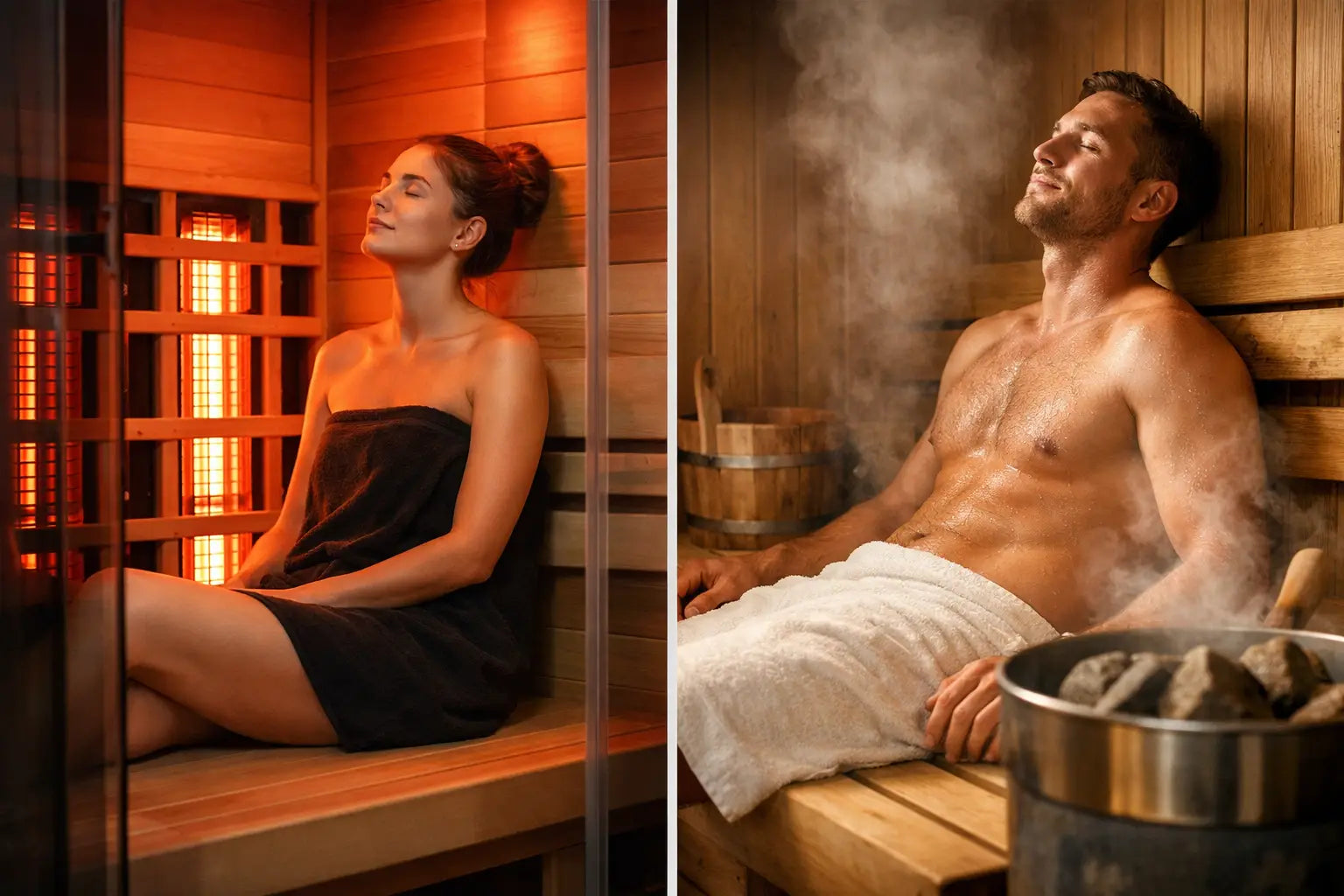
A traditional sauna warms the air inside the cabin, usually with an electric or wood-burning heater and sauna stones. The heated air then warms your skin and body. Many traditional saunas operate at higher temperatures, commonly around 150 to 195 degrees Fahrenheit, depending on the model and user preference. Pouring water over hot stones adds a burst of steam, known for creating the familiar wave of intense, humid heat.
An infrared sauna uses infrared emitters to warm the body more directly rather than relying primarily on hot air. The cabin air is generally cooler, often around 110 to 150 degrees Fahrenheit. That does not necessarily mean the session feels mild. The warmth can feel deep and steady, but it is usually easier to tolerate for people who find conventional sauna temperatures overwhelming.
Neither approach is automatically better. The right choice is the one you will use consistently, comfortably, and with care.
Choose traditional sauna heat for a classic ritual
Traditional saunas are rooted in an elemental experience: hot stones, warm wood, rising steam, and the dramatic release that comes from stepping into cool air afterward. For many homeowners, that sensory ritual is the point. It feels social when shared, grounding when enjoyed alone, and especially satisfying after time outdoors or an intense training session.
The higher air temperature creates a full-room experience. Your skin warms quickly, and the atmosphere itself becomes part of the ritual. If you enjoy the option to adjust humidity by adding water to stones, a traditional sauna offers a level of participation that infrared models do not replicate.
Traditional saunas can also be a natural fit for outdoor living. A barrel sauna near a pool, patio, or cold plunge creates a compelling contrast therapy setting, while a larger cabin sauna can become a gathering place for family and guests. Indoor traditional models can be equally elegant, though they may require more planning for electrical capacity, ventilation, flooring, and moisture management.
There are trade-offs. Traditional units generally need more time to preheat, often 30 to 45 minutes, although actual timing varies by heater, size, insulation, and outdoor conditions. The stronger heat may also shorten the session for those who are heat-sensitive. If your ideal sauna ritual is quiet, brief, and frequent, this may matter more than the romance of the stones.
Choose infrared for convenient, gentler consistency
Infrared saunas appeal to people who want warmth without the intensity of a high-heat room. Because they typically operate at lower ambient temperatures and can warm up faster, they often suit a reliable daily or near-daily ritual. You might use one after a morning strength session, before bed as a way to decompress, or during an afternoon reset between demanding meetings.
The experience is less about steam and more about calm, sustained warmth. You can often stay in the cabin longer than you would in a traditional sauna, provided you are well hydrated and feel comfortable. For many users, that makes infrared a more approachable starting point, especially if they are new to sauna bathing or have found conventional saunas too intense in the past.
Infrared cabins are also frequently easier to place indoors. Many are designed for a spare bedroom, home gym, primary-suite retreat, or dedicated wellness room. They usually require less complex ventilation than a steam-producing traditional sauna, though every model has specific electrical, clearance, and installation requirements that should be reviewed before purchase.
Still, infrared is not a substitute for the classic Finnish-style sauna experience. It does not offer the same rush of hot, humid air, the ritual of water on stones, or the communal atmosphere many people love. If those details are central to your idea of restoration, a traditional sauna may remain the more emotionally satisfying investment.
Think beyond heat: consider the ritual you want to build
A sauna earns its place in a home when it supports a rhythm you can sustain. Before comparing heaters, panel types, or cabin dimensions, picture the moment you hope to create.
Do you want a restorative retreat after work, with low lighting and a few quiet minutes before sleep? An infrared sauna may feel especially natural in that setting. Do you picture winter evenings outside, moving between a cedar sauna and a cold plunge? A traditional outdoor sauna may better serve that vision.
Your household matters, too. A person who enjoys longer, lower-temperature sessions may favor infrared, while a partner who loves intense heat and steam may be disappointed without a traditional heater. Some homes benefit from choosing the option that serves the primary user best. Others may find that a larger traditional sauna creates more shared value over time.
There is also no rule that says your wellness space must do everything at once. A thoughtfully chosen sauna can be the anchor of a broader home ritual, paired with stretching, hydration, breathwork, red light therapy, or cold exposure according to your preferences and tolerance.
Installation, maintenance, and operating realities
The practical side of sauna ownership deserves as much attention as the atmosphere. Infrared saunas are often more straightforward to assemble and may work with common household electrical configurations, although larger or higher-powered models can require a dedicated circuit. Traditional electric saunas commonly need 240-volt power and professional installation. Wood-fired models bring extraordinary character but demand proper siting, chimney considerations, and more hands-on operation.
Traditional saunas that use water on stones need materials and construction designed to handle moisture. Good ventilation, appropriate wall and floor finishes, and regular care protect both the sauna and the room around it. Infrared saunas are typically dry heat environments, which can make them simpler for certain indoor locations.
Maintenance is manageable for either type when the sauna is well built. Wipe benches after use, allow the space to dry, and follow the manufacturer’s care guidance for wood, heaters, and electrical components. In a traditional sauna, monitor stones and replace them when they begin to break down. For an outdoor sauna, weather protection and a sound foundation are part of preserving the experience for years to come.
Energy use varies by size, session length, insulation, climate, and heater type. Infrared units may use less energy per session because of their lower operating temperatures and faster warm-up. That said, the more useful question is often how you plan to use the sauna. A sauna that fits naturally into your life delivers more value than one chosen solely for a small difference in operating cost.
A note on wellness benefits and safety
Regular sauna use can support relaxation, a sense of recovery, and a calming transition out of a stressful day. Heat exposure may also temporarily increase heart rate and circulation, much like light to moderate physical activity. But a sauna is not a replacement for medical care, sleep, movement, or a well-rounded recovery plan.
Hydrate before and after each session, leave the sauna if you feel dizzy, nauseated, faint, or unwell, and avoid alcohol before use. People who are pregnant, have cardiovascular concerns, take medications that affect heat tolerance or blood pressure, or have other health conditions should speak with a qualified clinician before beginning a sauna routine. A thoughtful ritual always leaves room for your body’s feedback.
The better sauna is the one that calls you back
Choose infrared if you value lower ambient heat, quick access, and a quiet, steady solo ritual. Choose traditional if you want high heat, optional steam, sensory depth, and a more classic communal sauna experience. Both can transform an unused corner of a home into a place where your nervous system can settle and your recovery routine can take root.
At WellNest Home, the most meaningful wellness spaces are not built around the most elaborate equipment. They are shaped around the moments you want more of: a clear mind after a demanding day, warmth in the middle of winter, and a small, dependable invitation to care for yourself before life asks for your attention again.

Leave a comment
This site is protected by hCaptcha and the hCaptcha Privacy Policy and Terms of Service apply.