

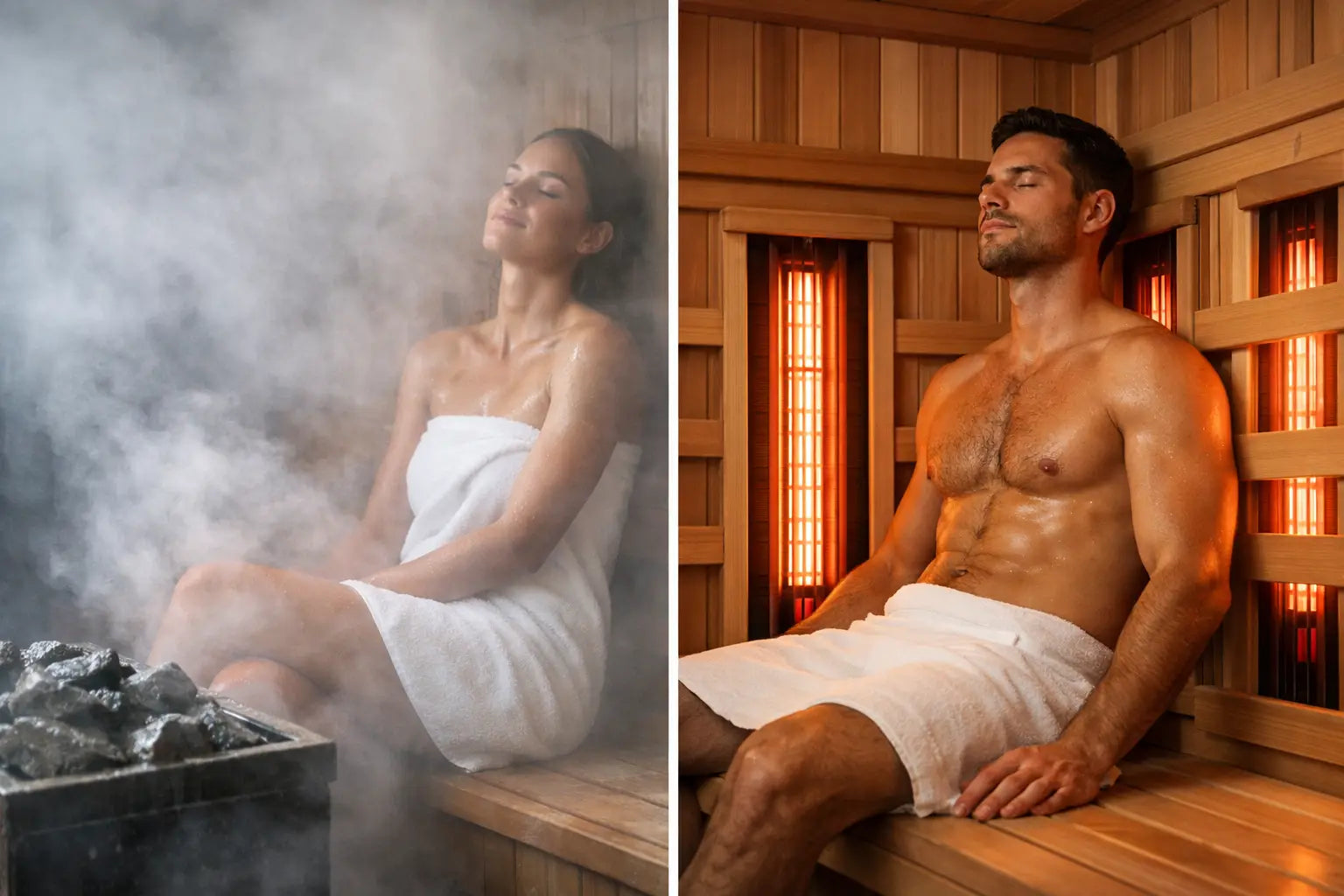
Steam Versus Infrared Sauna: Which Fits Your Ritual?
A sauna should feel like a reliable place to return to, not another complicated decision in a crowded wellness routine. When comparing steam versus infrared sauna, the real question is not which experience is universally better. It is which kind of warmth will support the way you want to recover, rest, and care for yourself at home.
Steam surrounds the body in dense, humid heat. Infrared uses radiant heat to warm the body more directly in a gentler, drier environment. Both can become meaningful parts of a restorative ritual, but they differ in sensation, setup, maintenance, and the type of person most likely to use them consistently.
Steam Versus Infrared Sauna: The Core Difference
A steam sauna, often called a steam room, creates heat by filling an enclosed space with water vapor. Temperatures are typically lower than a traditional dry sauna, often around 110 to 115 degrees Fahrenheit, but the humidity can approach 100 percent. The air feels thick, enveloping, and intensely warm. Many people love the sensation of deep moisture on the skin and the ritual of breathing in warm, humid air after a long day or demanding workout.
An infrared sauna produces radiant heat through infrared emitters. Rather than relying primarily on very hot air, the heat is absorbed by the body directly. Cabin temperatures commonly sit around 110 to 150 degrees Fahrenheit, depending on the model and setting, with low humidity. For many users, this makes the experience more approachable and easier to sustain for a longer, comfortable session.
Traditional dry saunas sit between these two experiences in some respects. They heat the air and may allow water to be poured over stones for a brief burst of humidity. But if your decision is specifically between steam and infrared, humidity and installation requirements tend to be the clearest dividing lines.
Choose Steam for a Full-Sensory Heat Ritual
Steam has a particular kind of presence. The room softens at the edges, the air becomes warm and wet, and a 10- to 15-minute session can feel like stepping out of the pace of the day. For someone who associates wellness with a spa-like atmosphere, steam can be deeply compelling.
It may be especially appealing if you enjoy humid climates, want a warming ritual after cold-weather outdoor activity, or simply find moisture comforting when you feel tense. Some people also appreciate steam when seasonal dryness leaves their skin or airways feeling uncomfortable. That said, steam is not a treatment for respiratory illness, and anyone with a health concern should seek guidance from an appropriate clinician rather than relying on heat therapy alone.
The trade-off is practical. A steam room needs a fully waterproof enclosure, proper drainage, ventilation, and materials designed to handle constant moisture. It is generally a more involved project than placing a sauna cabin in a finished room. Grout, tile, seals, and steam-generating equipment all need thoughtful installation and routine care to prevent moisture damage and maintain a clean environment.
Steam is often the better choice when you are already renovating a primary bath, building a dedicated spa suite, or designing a custom wellness sanctuary from the ground up. In that setting, its immersive quality can justify the additional planning.
Choose Infrared for Consistent, Convenient Recovery
Infrared often fits more naturally into the rhythm of everyday home wellness. The heat is dry, the cabin is typically simpler to install, and many people find it comfortable enough to use several times a week. That consistency matters more than choosing the most dramatic experience on paper.
A well-made infrared sauna can be placed in a home gym, a quiet corner of a primary suite, a finished basement, or another dedicated indoor space with appropriate electrical access and clearances. It creates a contained ritual: step inside, settle into the warmth, breathe, and allow the nervous system a chance to downshift.
For active households, infrared is often attractive after strength training, running, cycling, or a long day spent at a desk. The gentler air temperature can feel less overwhelming than high-humidity heat, especially for people who are heat-sensitive or new to sauna bathing. You may be able to sit, read, listen to a calming playlist, or simply be still without feeling rushed to leave.
Infrared is also a strong fit for homeowners who want a premium wellness addition without the construction demands of a steam room. Depending on the sauna, assembly, power requirements, available floor space, and ventilation needs still deserve careful review. But the path from consideration to daily use is often more straightforward.
Recovery Benefits: Be Clear About What Heat Can Do
Both steam and infrared sauna bathing can support relaxation, comfort, and a sense of physical release. The heat encourages sweating and increases circulation while you are in the session. Many people use sauna time as a transition after exercise, a way to loosen the feeling of post-workout stiffness, or a calming pre-bed ritual.
The strongest benefit may be behavioral: a sauna creates protected time to pause. A regular 20-minute heat session can replace the reflex to continue working, scrolling, or pushing through fatigue. That does not make sauna a cure-all, and it should not replace medical care, sleep, hydration, nutrition, or a well-designed training plan. It can, however, become a valuable support within those foundations.
Be wary of claims that any sauna can rapidly “detox” the body or produce dramatic fat loss. Sweating is a normal temperature-regulation response, and temporary changes on the scale after a session mostly reflect fluid loss. Rehydrate afterward, and choose wellness equipment for the experience and routine it helps you build, not for exaggerated promises.
Comfort Is Personal, Not a Performance Test
The best sauna is the one you will want to use on an ordinary Wednesday evening. If you love the cloudlike intensity of humid heat and have the space for a dedicated wet-room installation, steam may feel unmatched. If you prefer dry warmth, lower ambient temperatures, and a simpler home setup, infrared may invite more frequent use.
Consider how you respond to heat outside the showroom or spa. Do you leave a steam room feeling restored, or do you feel breathless and eager for the door? Does dry heat help you settle, or do you miss the sensory richness of humidity? Your own comfort is useful data.
It is also worth considering who will use the space. A household with varied heat preferences may find infrared more accessible. A couple creating a custom bath retreat may prioritize the atmosphere of steam. There is no need to select the more elaborate option if it does not match your real habits.
Installation, Maintenance, and Home Design
An infrared cabin is generally the more flexible option for an existing home. Before purchasing, confirm the sauna’s footprint, ceiling height, electrical requirements, delivery path, flooring suitability, and the manufacturer's clearance recommendations. A premium cabin should feel intentional in the room, with enough surrounding space to enter comfortably and maintain it properly.
Steam demands more technical coordination. A steam generator must be sized for the room, and the enclosure needs suitable vapor-proofing, sloped ceilings or thoughtful condensation management, drainage, ventilation, and moisture-resistant finishes. This is a project to plan with qualified design and installation professionals, particularly when plumbing and electrical work are involved.
Maintenance follows the same pattern. Infrared cabins usually require regular wiping, towel use, and occasional deeper cleaning. Steam rooms require vigilant attention to surfaces, ventilation, and the steam system because moisture is part of every session. Neither should feel burdensome when properly planned, but steam asks more of the space.
A Safer Way to Build the Ritual
Start gently, especially if sauna bathing is new to you. A shorter session at a comfortable temperature is more valuable than trying to tolerate an extreme one. Hydrate before and after, step out if you feel dizzy, nauseated, faint, or unwell, and avoid alcohol before sauna use.
People who are pregnant, have cardiovascular conditions, have uncontrolled blood pressure, take medications that affect heat tolerance or hydration, or have other medical concerns should speak with their clinician first. Children and older adults may need additional caution. A thoughtful wellness ritual should leave you feeling cared for, never depleted.
For many homes, the choice comes down to this: steam creates a destination, while infrared makes it easier to return to warmth often. Let your space, your comfort, and the recovery rhythm you hope to protect guide the decision. The most luxurious sauna is not necessarily the one with the most features. It is the one that gives you a quiet, dependable reason to choose yourself again.


Leave a comment
This site is protected by hCaptcha and the hCaptcha Privacy Policy and Terms of Service apply.