


Are Home Saunas Worth It? An Honest Look Before Buying
A sauna membership can be a beautiful escape, but it also asks you to schedule your calm around traffic, class times, and someone else’s hours. That is the real question behind are home saunas worth it: not simply whether heat feels good, but whether having it a few steps away will become a meaningful part of your life.
For the right household, a home sauna is more than a luxury purchase. It is a private place to decompress after work, loosen up after training, or create a quiet transition into sleep. For others, it can become an expensive room accessory. The difference usually comes down to routine, fit, and choosing a sauna that genuinely suits your space and health goals.
What You Are Really Buying
A home sauna is not just a heated cabin. It is the ability to return to warmth on your own schedule, without packing a bag or sharing the room with strangers. That convenience changes the likelihood of regular use, which is where much of the value lies.
Many people are drawn to sauna bathing for relaxation, temporary relief from everyday muscle tension, and the deeply calming effect of a consistent heat ritual. A session can create a natural pause between the demands of the day and the rest of your evening. For active households, it may also become part of a recovery rhythm after strength training, long runs, or demanding travel days.
There is encouraging research around regular sauna use and cardiovascular health, but a home sauna should not be treated as a substitute for medical care, exercise, sleep, or a balanced diet. The most grounded way to view it is as a supportive wellness practice: one that can make rest, recovery, and intentional downtime easier to sustain.
Are Home Saunas Worth It Financially?
The financial case is personal. A sauna may be worth the investment when you already spend consistently on spa visits, gym recovery amenities, massage, or wellness memberships, and you value the privacy and flexibility of bringing one ritual home. It can be less compelling if you are hoping a sauna will single-handedly change habits that have not yet taken root.
Consider the total cost rather than the purchase price alone. Your budget should account for the sauna itself, electrical needs, site preparation, delivery, assembly, ventilation where appropriate, and any finish work that turns the area into a space you truly want to use. Outdoor models may require a level foundation and consideration for weather exposure. Indoor models need a location with adequate clearance, a suitable floor, and easy access to power.
Operating costs are also part of the picture, although they are usually more manageable than people expect when sessions are intentional and the sauna is properly sized. Energy use varies by sauna type, local utility rate, insulation, ambient temperature, and how long the unit runs. A large outdoor traditional sauna in a cold climate will have a different operating profile than a compact infrared cabin in a conditioned home gym.
The more useful calculation is cost per use over time. If two people use a sauna four or five times a week for years, the investment often begins to feel very different from a high-end purchase that gets used once a month. Be candid about your household’s likely rhythm, not your idealized one.
The Right Sauna Makes the Difference
The best home sauna is not universally the hottest, largest, or most technologically advanced. It is the one that matches how you want to feel and where you will realistically place it.
Infrared for a low-friction daily ritual
Infrared saunas use radiant heat to warm the body more directly than the surrounding air. They generally operate at lower air temperatures than traditional saunas, which some people find more approachable for longer, gentler sessions. They can be especially appealing for a primary bedroom suite, home gym, or recovery room where convenience is the priority.
For someone who wants to step in after a workout, listen to a calming playlist, and emerge feeling settled without an intensely hot environment, infrared can be a natural fit. It is often the easier entry point for households new to sauna bathing.
Traditional sauna for the classic heat experience
A traditional sauna uses an electric or wood-burning heater to warm the air and stones. Water can be ladled over the stones to introduce steam, creating the familiar wave of heat many sauna enthusiasts love. The experience tends to be hotter, more enveloping, and more social than infrared.
This option is worth considering if you are drawn to a true Nordic-style ritual, enjoy alternating heat and cool-down periods, or want a sauna that can comfortably become part of family and guest gatherings. It may require more planning for electrical service, ventilation, and location, but the sensory experience is difficult to replicate.
Outdoor and barrel saunas for a stronger sense of retreat
An outdoor sauna can transform a backyard from a place you pass through into a private recovery destination. The walk outside, the change in temperature, and the opportunity to cool down in fresh air can make the ritual feel distinctly separate from the noise of home.
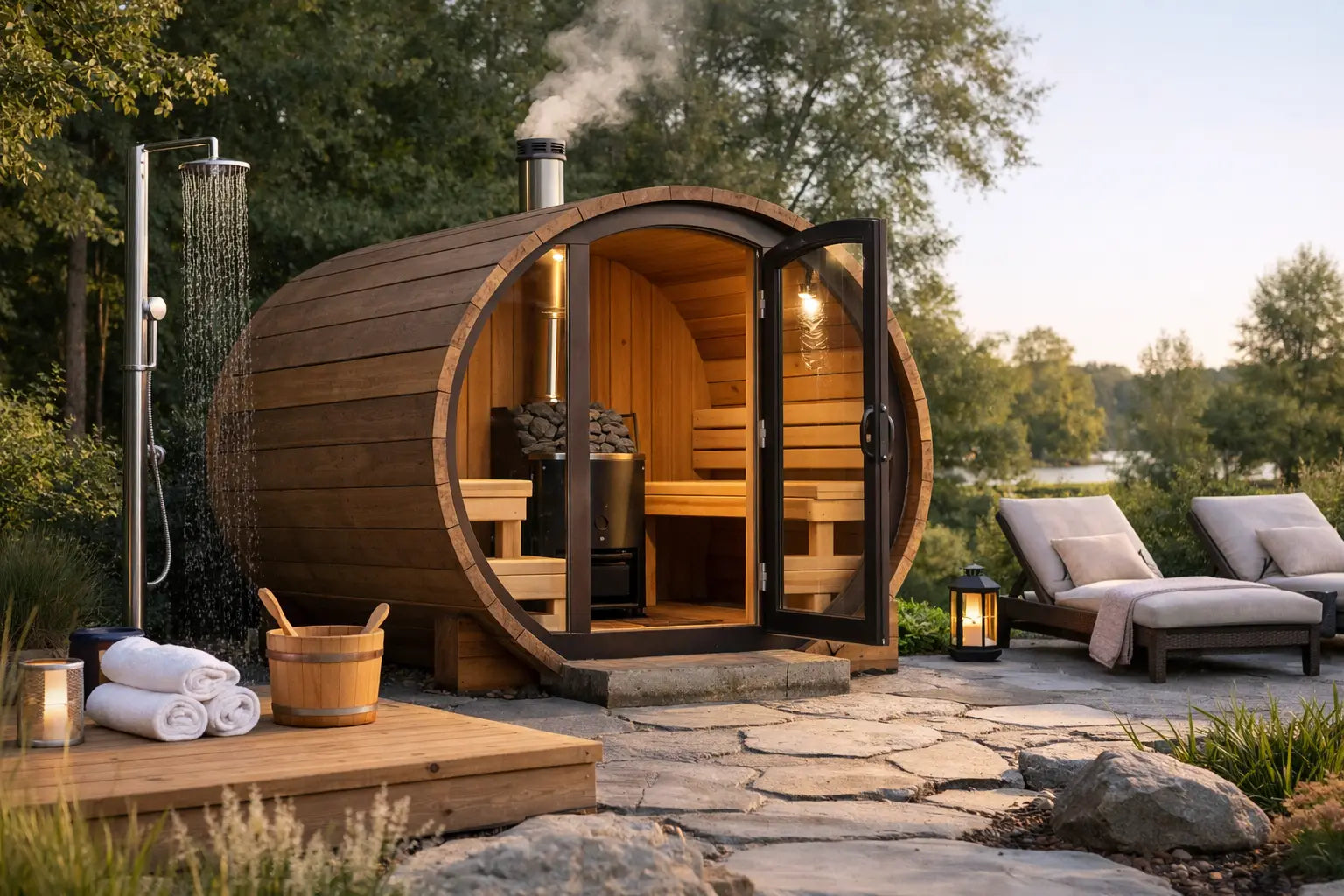
Barrel saunas are popular for their sculptural presence and efficient shape, while cabin-style outdoor saunas can offer more interior space and design flexibility. In either case, think beyond the sauna footprint. You will want a clear, comfortable path, lighting for evening use, and a place to sit, hydrate, and cool down.
Space, Installation, and the Details That Protect Your Investment
A premium wellness space should feel restful, not improvised. Before choosing a model, measure the room or outdoor site carefully, including ceiling height, door swing, access routes, and required clearances. Confirm your electrical capacity with a licensed electrician, particularly for traditional heaters that may require a dedicated higher-voltage circuit.
Ventilation requirements depend on the model and installation setting. Follow the manufacturer’s specifications rather than assuming any enclosed corner will work. Outdoors, prioritize a stable base and weather-appropriate placement. Indoors, consider moisture management, nearby materials, and flooring that can handle the environment.
It is also wise to plan for the moments around the session. A robe hook, water station, towel storage, dimmable lighting, and a comfortable cool-down chair may seem secondary, yet they are what turn a unit into a ritual. When the setup feels easy and inviting, use becomes more consistent.
Who May Find a Home Sauna Less Worthwhile
Not every wellness goal requires a sauna. If your main priority is acute injury care, significant pain, or a condition that needs clinical evaluation, begin with a qualified healthcare professional rather than a heat-based purchase. Sauna sessions can feel restorative, but they are not a diagnosis or treatment plan.
A sauna may also be a poor fit if you have no realistic location for it, dislike heat, travel frequently, or tend to abandon home fitness and wellness equipment after the first few months. There is no virtue in buying the most impressive model if it adds pressure instead of relief.
Certain people should seek medical guidance before using a sauna, including those who are pregnant, have cardiovascular conditions, experience low blood pressure or fainting, take medications that affect heat tolerance or hydration, or have other health concerns. Children should always be supervised, and alcohol has no place in a sauna routine.
How to Make the Investment Feel Worth It
The strongest predictor of value is not intensity. It is repeatability. Start with shorter, comfortable sessions and build a routine that fits naturally into your week. For some, that means 15 quiet minutes after a morning workout. For others, it is a Friday evening reset with a shower, aromatherapy, and an early bedtime.
Hydrate before and after, listen to your body, and leave the sauna if you feel dizzy, nauseated, weak, or unwell. Avoid making a heat session another performance metric. The goal is not to endure the longest possible stay. It is to create a practice that leaves you feeling clear, cared for, and ready to return to your life.
A thoughtful retailer such as WellNest Home can be particularly valuable when you are deciding among sauna types, electrical requirements, size options, and the experience you want to create. Expert guidance helps ensure your investment is built around your actual home and habits, rather than a showroom fantasy.
The most worthwhile home sauna is the one that quietly earns its place in your day: a warm room waiting after effort, a private pause before sleep, and a reminder that recovery deserves a place on the calendar.

Leave a comment
This site is protected by hCaptcha and the hCaptcha Privacy Policy and Terms of Service apply.