Red Light Panel Review: What Matters Before You Buy
A thoughtful red light panel review should answer more than whether a device turns on and glows. The right panel can become a quiet, dependable part of an at-home recovery ritual - a few unhurried minutes after training, before a shower, or at the close of a demanding workday. The wrong one may be underpowered for your goals, awkward for your space, or so complicated that it spends more time stored away than in use.
For a premium home wellness purchase, the best choice is rarely the panel with the longest spec sheet. It is the one whose light output, treatment area, controls, safety features, and physical footprint support a routine you will actually keep.
Red Light Panel Review: The Criteria That Count
Red light therapy panels use specific ranges of visible red and near-infrared light, commonly measured in nanometers. Red light is generally associated with more surface-level applications, while near-infrared light reaches deeper because it is invisible and can penetrate tissue differently. Many full-body and half-body panels combine both ranges so users can build a more versatile recovery practice.
That combination is useful, but it should not be treated as a promise of a particular medical outcome. Light therapy is not a substitute for medical care, diagnosis, or treatment. Its value at home is often in creating a consistent, noninvasive ritual that may support skin appearance, post-workout recovery, circulation, and a greater sense of physical ease. Results vary with the device, the goal, the person, and above all, regular use.
Wavelengths: Look Beyond the Marketing Language
A quality panel should clearly disclose its wavelengths rather than relying on vague phrases such as “multi-spectrum” or “professional-grade light.” Red wavelengths frequently appear around 630 to 660 nanometers, and near-infrared wavelengths often fall around 810 to 850 nanometers. There is no single magic number. What matters is that the device uses intentional, well-established ranges and explains how they are delivered.
More wavelengths do not automatically make a panel better. A device with several wavelengths may be appealing for broad use, but a simpler configuration can be equally sensible when its output and treatment design are transparent. If your primary interest is facial skin care, controllable red light and a comfortable setup may matter more than an oversized unit with every available feature. If you want support for larger muscle groups after strength training, near-infrared capability and broader coverage become more relevant.
Irradiance and Dose: Strong Enough, Not Excessive
Irradiance describes the amount of light energy reaching a surface, usually expressed in milliwatts per square centimeter. It is one of the most useful specifications in a red light panel review, but also one of the easiest to misunderstand.
A high number printed on a product page is not enough. Ask how it was measured, at what distance, and whether the stated figure reflects the panel’s center or a more realistic average across the treatment area. Light intensity falls as you move farther from the device. A panel may look impressive at two inches but offer a different experience at the 12 to 18 inches where many people prefer to stand or sit.
Higher irradiance can shorten session times, which is convenient for busy households. Yet more power is not always more beneficial. Light therapy follows a dose-response relationship: too little may be ineffective for your intended use, while excessive exposure is not necessarily better. The strongest purchase guidance is clear, conservative session recommendations based on distance, time, and intended treatment area.
Coverage Changes the Experience
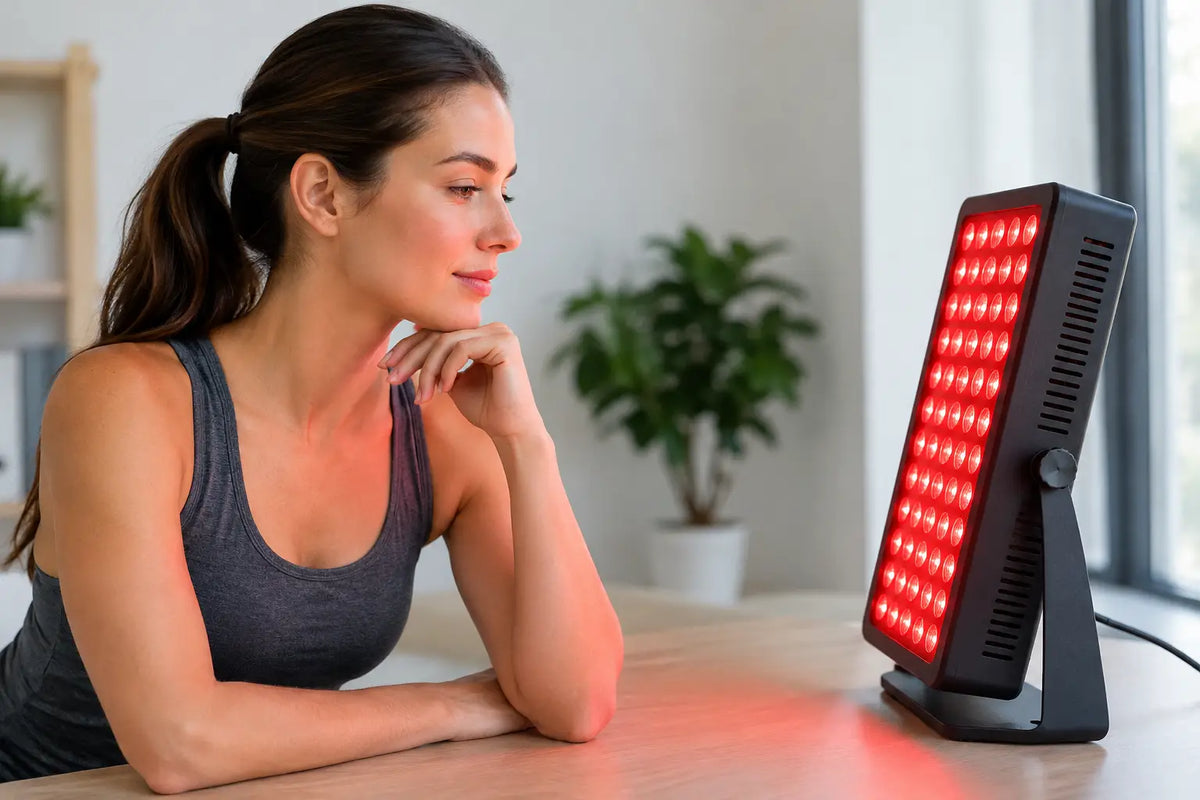
Coverage is where a panel stops being a technical object and starts becoming part of your home. A compact panel can be excellent for the face, neck, joints, or targeted post-workout use. It is easier to place on a desk or countertop, easier to travel with, and often more approachable for a first purchase.
Larger panels offer a different kind of value. They allow you to treat the back, legs, torso, or multiple areas with fewer position changes. For someone creating a dedicated recovery corner near a sauna, cold plunge, or home gym, this can make the ritual feel more complete and less fragmented.
The trade-off is practical. Large panels need a stable stand or mounting solution, clear floor space, and thoughtful storage. Before purchasing, measure the wall, doorway, or corner where the panel will live. Also consider whether you prefer to stand, sit, or lie down during sessions. The most luxurious setup is one that feels effortless on an ordinary Wednesday, not just impressive on delivery day.
Features That Make a Panel Easier to Use
The best red light therapy panel is not necessarily the one with the most buttons. It is the one that gives you useful control without turning a restorative practice into another task to manage.
Independent red and near-infrared controls can be worthwhile for buyers who have a specific protocol or prefer visible light for one session and combined light for another. Adjustable brightness, built-in timers, and a reliable remote can also make a difference, especially when the panel is wall-mounted or used in a shared wellness space.
Cooling fans deserve attention as well. Panels produce heat, and a well-designed cooling system helps protect the device and maintain a more comfortable session. Fan noise is not merely a minor detail. If your goal is to return to calm after work, a loud mechanical hum can disrupt the atmosphere you are trying to create.
Build quality matters over the long term. Look for a solid housing, dependable mounting hardware, straightforward warranty coverage, and a company that can answer questions after the sale. Premium wellness equipment should feel considered from the power cord to the stand, not like a disposable gadget dressed in sleek packaging.
Safety and Comfort Belong in Every Review
Red light therapy is generally considered noninvasive, but a responsible routine begins with the manufacturer’s instructions. Eye comfort is particularly personal. Some people are comfortable with eyes closed at an appropriate distance, while others prefer protective eyewear, especially around bright visible red LEDs. Follow the panel maker’s guidance and avoid staring directly into intense lights.
If you are pregnant, have a light-sensitive condition, have a history of eye disease, are receiving treatment for a medical condition, or take medications that increase photosensitivity, speak with a qualified clinician before beginning. The same care applies to anyone using a panel over an area of active concern or injury.
Comfort also affects consistency. Start conservatively with shorter sessions and a comfortable distance. Notice how your skin and eyes feel, then adjust according to the device instructions. A calm, repeatable practice will serve you better than pushing for the longest possible exposure on day one.
Matching the Panel to Your Ritual
There is no universal winner because the right panel depends on how you plan to live with it. A compact unit may be ideal for the professional who wants a 10-minute morning skin-care ritual beside the bathroom vanity. A medium panel can suit the active household that wants targeted support for shoulders, knees, and legs after training. A larger panel is often the natural choice for a dedicated recovery room where full-body sessions are part of a broader rhythm of heat, cold, hydration, and rest.
For many homes, placement determines success. Keep the panel accessible, with enough room to use it safely and without rearranging furniture. A device tucked into a closet asks for willpower. A device placed thoughtfully beside a yoga mat, lounge chair, or recovery station invites use.
At WellNest Home, that distinction is central to thoughtful curation: wellness products should support an intentional home ritual, not add another complicated obligation to the day.
The Value Question: When Is a Premium Panel Worth It?
Price differences among panels can be significant. Entry-level devices may provide a reasonable introduction to targeted use, but they can involve smaller treatment areas, fewer controls, limited documentation, and less reassuring warranty support. Premium panels tend to justify their cost through larger coverage, clearer performance data, stronger construction, flexible mounting, and service that helps a high-consideration purchase feel secure.
It depends on your goals. If you only want occasional facial use, paying for a full-body system may not be sensible. If you know you want a recurring recovery ritual for your whole body, buying too small can become an expensive compromise. Consider cost not only per device, but per realistic session: how much of the body can you treat, how long will it take, and will the setup fit your schedule?
A worthwhile panel does not need to transform your routine overnight. It should offer a simple invitation: step into the warmth of the light, slow down for a few minutes, and give your body a consistent place to recover.