How Far From Red Light Panel Is Best?
If you have ever stood in front of your panel wondering how far from red light panel treatment you should be, you are asking exactly the right question. Distance shapes how much light actually reaches your skin, how comfortable the session feels, and whether your daily ritual supports calm recovery or turns into guesswork.
The good news is that most people do not need a complicated formula. In home use, the right distance usually falls within a practical range, then gets adjusted based on your goals, the strength of your panel, and the area you want to treat. A few small changes can make your sessions feel more intentional and more effective.
How far from red light panel use is usually ideal
For most high-quality red light therapy panels, a distance of about 6 to 18 inches is a reliable starting point. That range is common because it balances comfort with intensity. Closer distances generally deliver more concentrated light to a smaller area, while farther distances spread the light over a broader section of the body with less intensity.
If you are treating a targeted area like the face, neck, shoulder, or knee, staying closer to the panel often makes sense. If you want a more general full-body session, stepping back a bit can create more even coverage. Neither approach is automatically better. It depends on whether you want focused support or a more expansive wellness ritual.
This is where many people get confused. They assume closer always means more effective. In reality, too close is not always better, especially if the panel is especially powerful or the session runs too long. The goal is not maximum intensity at all costs. The goal is an appropriate dose that feels sustainable and supports consistent use.
Why distance matters more than many people realize
Red light therapy works by delivering specific wavelengths of light to the body. But the body only benefits from the light that actually reaches the tissue in a meaningful way. As you move farther from the panel, the intensity drops. That means the same 10-minute session can feel very different at 6 inches versus 24 inches.
Distance also changes the experience of the ritual itself. Closer sessions feel more direct and treatment-focused. Farther sessions often feel softer and more immersive, especially when you are using a larger panel as part of a morning or evening recovery routine. If your goal is to create a restorative wellness space at home, comfort matters because comfort supports consistency.
There is also a practical side. Standing too close to a powerful panel may feel overly bright or warm for some users, especially during facial treatments. Standing too far away may mean you are getting less benefit than you expect, particularly if your sessions are short.
The best distance based on your goal
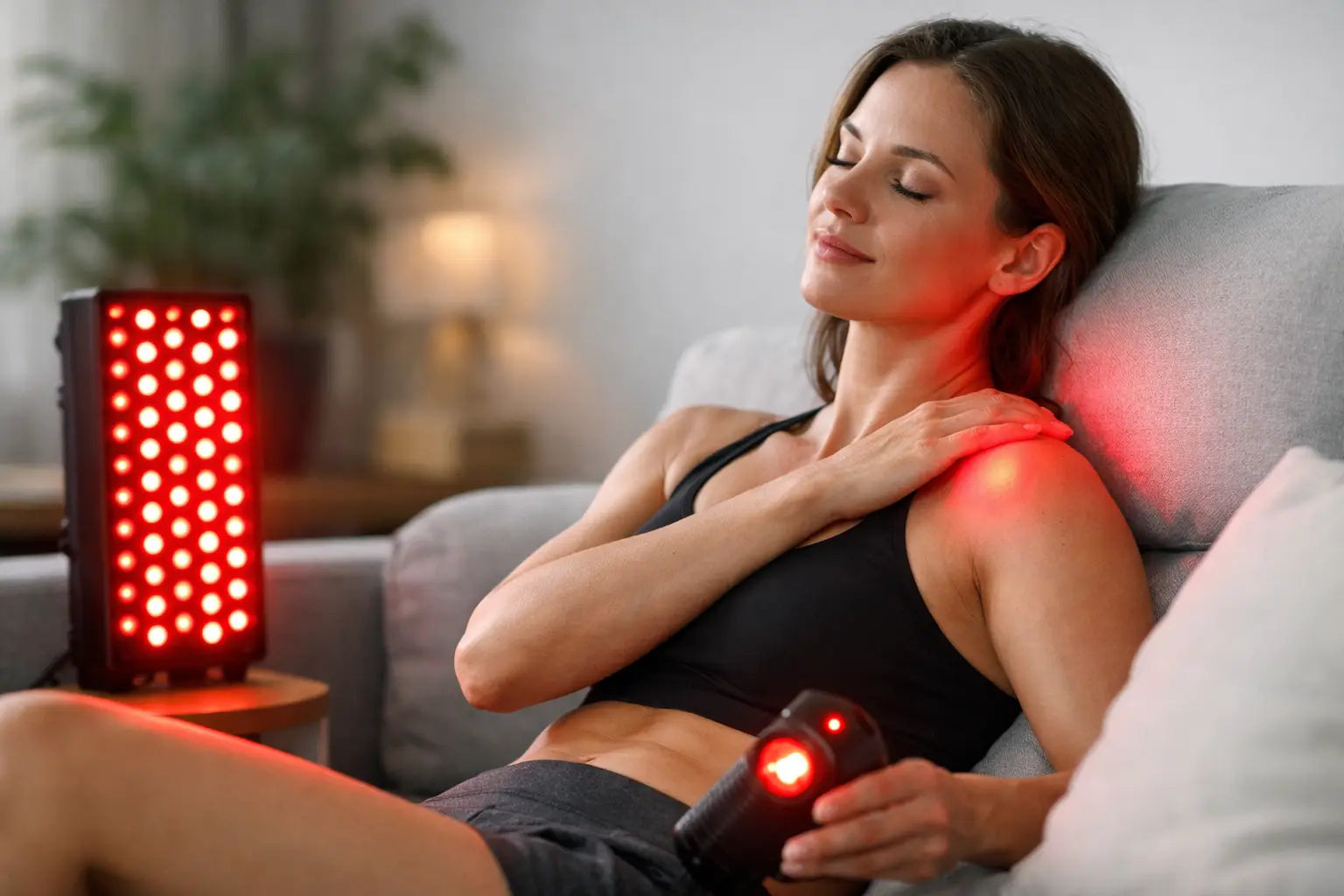
A targeted recovery session often benefits from a closer position. If you are focusing on a joint, a tight muscle group, or a specific area of tension, a distance of about 6 to 12 inches is often appropriate. This allows more concentrated exposure to the area you care about most.
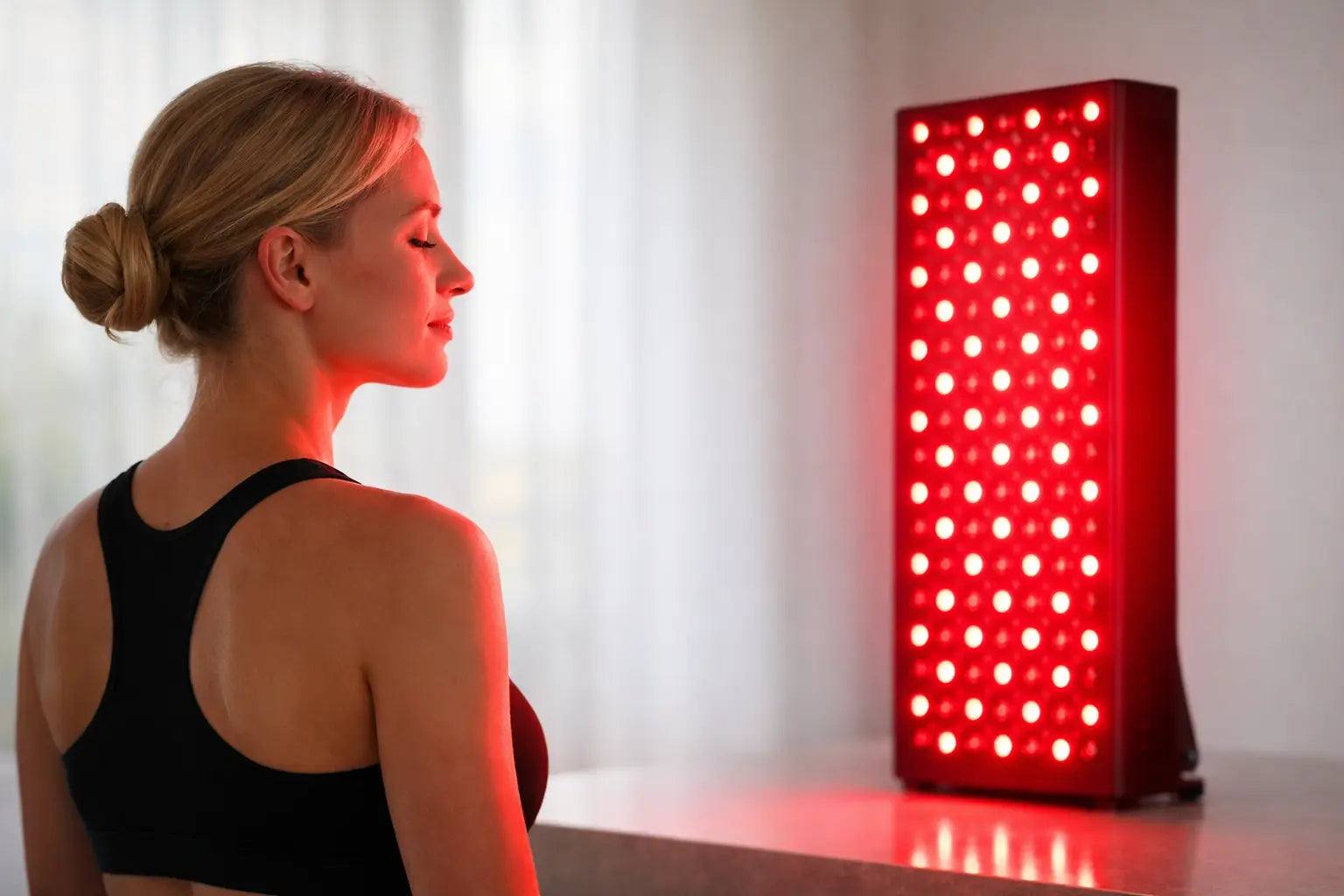
For skin-focused use, many people stay in a similar range, often around 6 to 12 inches, depending on the strength of the device and how sensitive the treatment area feels. Facial skin is more delicate than the skin on the legs or back, so comfort and manufacturer guidance matter here.
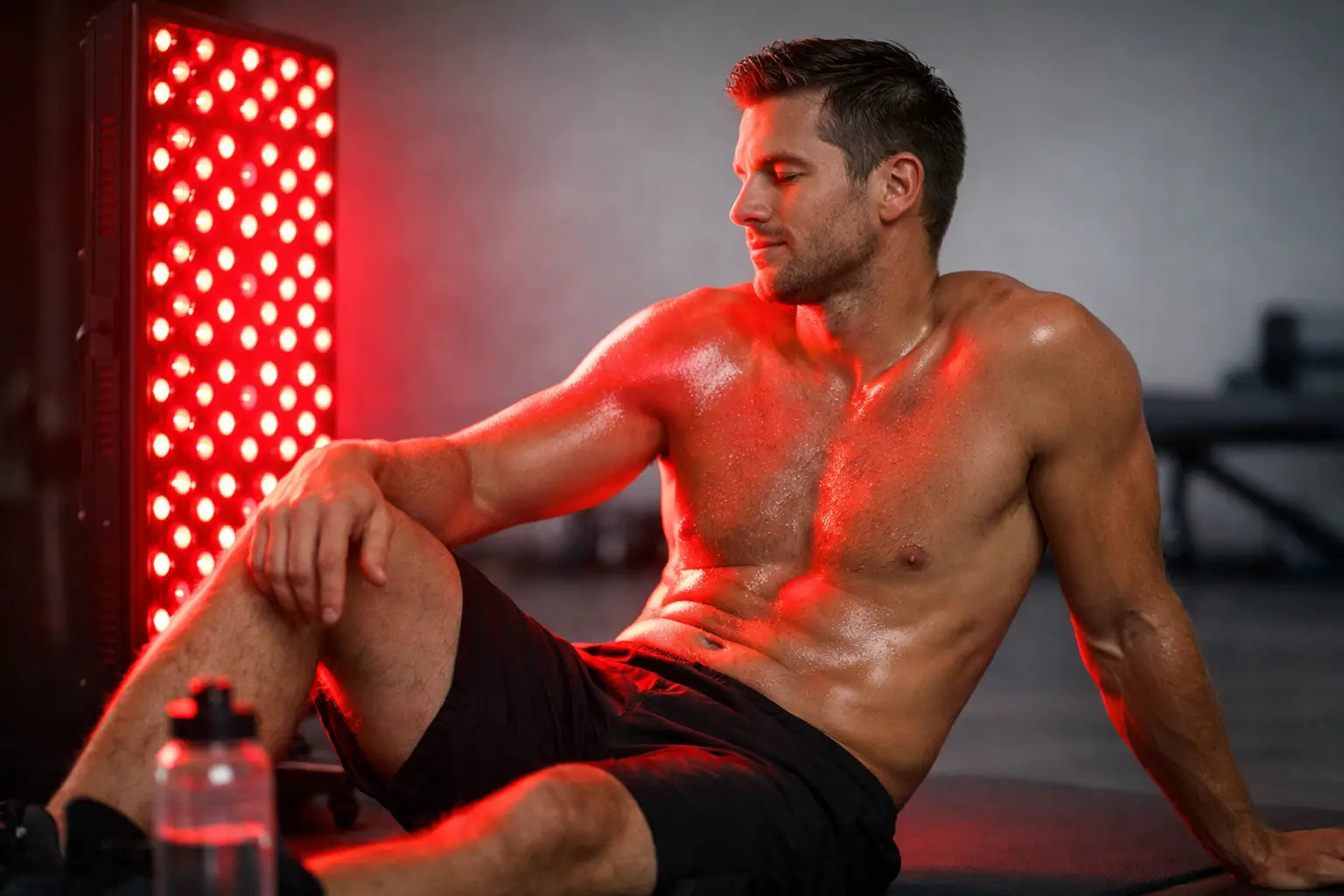
For broader sessions, such as standing in front of a larger panel to support general recovery, circulation, or post-workout restoration, 12 to 18 inches often feels more balanced. You still receive meaningful light exposure, but with better body coverage and a more relaxed setup.
If your panel is small, you may need to be closer to get enough intensity. If your panel is large and powerful, you may have more flexibility. This is why distance advice should never be completely one-size-fits-all.
Your panel's power changes the answer
Not all red light panels deliver the same output. A premium panel designed for higher irradiance can often be used from farther away while still delivering a strong session. A lower-powered panel may need to be used closer or for a longer period to produce a similar effect.
This is one reason expert guidance matters in a category that can feel crowded and inconsistent. Two panels can look similar online and perform very differently in the home. The right distance depends not just on red light in general, but on your specific device.
If your panel comes with irradiance data or a recommended treatment chart, use that as your baseline. Those guidelines are typically more useful than broad internet advice because they are tied to the actual output of your panel. Think of distance and time as partners. If you increase one, you may need to adjust the other.
How long to stay in front of the panel
Once you decide how far from red light panel placement works best for your setup, session length becomes the next piece of the equation. Many home users stay within 10 to 20 minutes per treatment area, depending on the device, the goal, and how often they use it.
Shorter sessions at a closer distance can be effective for focused treatment. Longer sessions at a slightly farther distance may work better for a more spacious full-body ritual. What matters is consistency and moderation. More is not endlessly better.
If you are new to red light therapy, begin conservatively. A shorter session at a moderate distance gives you room to observe how your body responds. From there, you can refine your routine instead of starting too aggressively.
Common mistakes when choosing distance
One common mistake is pressing too close to the panel because it feels like the strongest option. This can make the light uncomfortable, especially around the eyes or face, and may create a session that feels clinical rather than restorative.
Another mistake is setting the panel across the room and assuming any exposure counts. Red light therapy is not simply ambient mood lighting. Distance matters because the dose changes quickly as you move away from the source.
A third mistake is changing too many variables at once. If you adjust distance, session length, and frequency all in the same week, it becomes difficult to tell what is actually working for you. It is better to choose a solid starting point and build from there.
A simple way to find your best setup
Start with the manufacturer's suggested range if one is provided. If not, begin around 12 inches away for a balanced first session. That distance is often close enough to be effective but comfortable enough to maintain.
Use the panel for a short, consistent period for several sessions. Pay attention to how the light feels, whether the area you want to treat is fully covered, and whether the routine fits naturally into your day. If you want more focused intensity, move a little closer. If you want broader coverage or a gentler feel, step back slightly.
This kind of adjustment is especially helpful in home wellness spaces, where use is not just about performance on paper but about what you will return to regularly. The most beautiful routine is the one you can sustain.
Creating a calm, effective red light ritual at home
Distance is only part of the experience. The environment around the session can shape whether red light therapy becomes a rushed task or a meaningful pause. A quiet corner, a stable panel position, and a time of day you can protect all make the ritual easier to keep.
Many people prefer morning use for clarity and routine, while others enjoy evening sessions as a way to return to warmth after work, training, or travel. There is room for personal rhythm here. The best setup is one that feels grounded in your life rather than added on top of it.
At WellNest Home, that is often the larger goal behind choosing wellness equipment for the home. It is not simply about owning another device. It is about creating a space that supports better recovery, steadier habits, and a more intentional way to care for the body.
When to be more cautious
If you have very sensitive skin, are using topical products that increase light sensitivity, or are treating the face and eye area, be especially mindful of both distance and session length. Starting farther back and shortening the session can be a wise first step.
If the light feels harsh, if the heat feels distracting, or if the routine leaves you feeling overstimulated rather than restored, adjust. Red light therapy should feel supportive. Precision matters, but so does comfort.
The sweet spot for most people is not hidden. It usually lives in a simple middle ground: close enough to receive effective exposure, far enough to stay comfortable, and consistent enough to become part of your home wellness rhythm. Start there, and let the ritual teach you what your body prefers.