

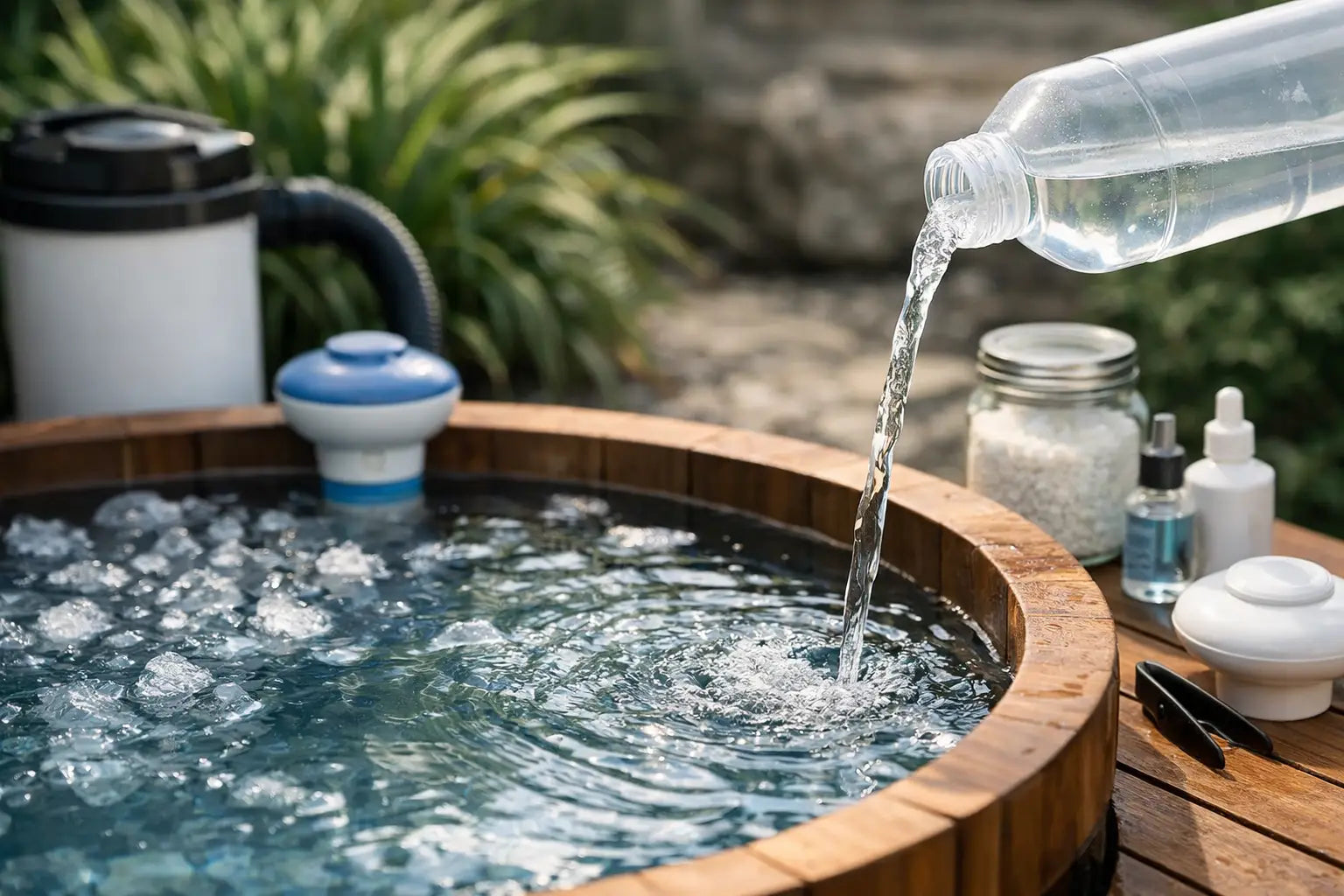
Cold Plunge Water Sanitation for Clear Soaks
A cold plunge should feel clarifying, not questionable. The water may look pristine after a few days, yet body oils, sweat, skin cells, and residue from lotions can already be changing its chemistry. Thoughtful cold plunge water sanitation protects the part of the ritual that matters most: the ease of stepping in, breathing deeply, and returning to your day refreshed.
For a premium home recovery space, sanitation is not an afterthought or a chore to postpone until the water turns cloudy. It is the quiet system behind a clean, comfortable, confidence-building soak.
Why cold plunge water changes faster than it appears
Cold temperatures slow the growth of many microorganisms, but they do not make water self-cleaning. Every session introduces a small amount of organic material into the tub. The more frequently a plunge is used, the more quickly those materials accumulate and reduce the effectiveness of any sanitizer.
Water can remain visually clear while its sanitizer level is too low, its pH has drifted, or its filter is holding debris. Clarity is a useful signal, but it is not a complete measure of water quality. That distinction matters in a tub designed for close, repeated contact with your skin.
The biggest variables are bather load, water volume, whether users shower before entering, outdoor exposure, and the equipment built into the system. A solo tub used a few times per week has very different needs than a family plunge used after workouts each day. There is no single drain-and-treat schedule that fits every home.
Cold plunge water sanitation starts with circulation
Sanitizer works best when it can move through the entire body of water. A chiller or circulation pump helps prevent still zones where contaminants and debris can linger, while a filter captures larger particles before they become part of the water chemistry problem.
Run circulation according to your tub or chiller manufacturer’s instructions, especially after use. If your system has a cartridge filter, inspect it regularly and rinse it when debris is visible. A filter that is overdue for cleaning does not merely look neglected. It restricts water flow and asks the sanitizer to do more work than it should.
For outdoor plunges, leaves, pollen, dust, and insects add another layer of maintenance. A fitted cover is one of the most effective sanitation tools you can own. Keep it on whenever the tub is not in use, and remove debris promptly rather than letting it break down in the water.
Choose a primary sanitizer, then use supplements wisely
Most home cold plunges use a chemical sanitizer, commonly chlorine or bromine, to maintain a measurable residual in the water. That residual matters because it continues working between uses. The right product and target range should always follow the instructions for your specific tub, chiller, and chosen treatment system.
Chlorine is familiar, accessible, and effective when water balance is maintained. Bromine is another option some owners prefer, though product compatibility and dosing requirements vary. Whichever route you choose, avoid switching casually between treatment types or combining chemicals without clear manufacturer direction. Mixing products can create unsafe reactions and make the water harder to balance.
Ozone, UV, and advanced oxidation systems can be valuable additions to a cold plunge setup. They help reduce contaminants as water passes through the equipment and may reduce the amount of primary sanitizer required. They are not, however, a substitute for a properly maintained sanitizer residual. Once treated water returns to the tub, it can be exposed to new contaminants with every use.
Hydrogen peroxide-based systems are sometimes marketed as gentler alternatives. They can work within a complete, compatible water-care program, but they require disciplined testing and correct dosing. Do not assume that a product labeled gentle is automatically suitable for every cold plunge material, pump, seal, or chiller. The equipment manual is part of the sanitation plan.
Test the water before it asks for attention
Reliable testing turns maintenance from guesswork into a brief, repeatable ritual. Test strips are convenient for frequent checks, while a liquid test kit can offer more precise readings. At a minimum, monitor sanitizer level and pH. Depending on your water source and treatment approach, alkalinity and hardness may also need attention.
A practical rhythm is to test before a soak when the tub is used frequently, then test again after heavier use, a gathering, or a period of outdoor exposure. Give chemicals time to circulate before testing, and use clean, dry hands when handling strips or reagents. Small habits protect the accuracy of the result.
pH deserves particular attention. If it rises too high, sanitizer becomes less effective and scale may form on equipment. If it falls too low, water can become irritating and potentially harder on components. Adjust gradually, retest, and resist the urge to correct several variables at once. Water chemistry rewards patience more than enthusiasm.
If a reading is far outside the recommended range, pause your plunge routine until it is corrected. If you are unsure how to respond, consult the manufacturer’s water-care guidance or a qualified pool and spa professional rather than layering in additional products.
Build a low-effort weekly care rhythm
The most sustainable cold plunge water sanitation routine is the one that fits into real life. A few minutes of attention after use is easier than recovering a neglected tub later.
A simple weekly rhythm can include:
- Skimming visible debris and wiping the waterline with a nonabrasive, equipment-safe cloth.
- Checking and rinsing the filter, then replacing it on the manufacturer’s recommended schedule.
- Testing sanitizer and pH, making measured adjustments, and allowing the system to circulate.
- Inspecting the cover, fittings, hoses, and chiller area for buildup, leaks, or restricted airflow.
Know when to drain and refresh the tub
Even well-maintained water has a useful life. Over time, dissolved solids and treatment byproducts accumulate. The exact refresh interval depends on tub size, use frequency, filtration, and whether the water is shared, but heavy-use tubs need more frequent draining than occasional personal plunges.
Treat these signs as a reason to investigate rather than mask the issue with extra sanitizer: persistent cloudiness, foam that returns quickly, a strong chemical odor, slippery surfaces, visible buildup, or water that will not hold a stable test reading. A harsh smell often indicates sanitizer reacting with contaminants, not an abundance of clean sanitizer.
When it is time to drain, turn off and disconnect equipment as directed by the manufacturer. Clean the shell, waterline, filter housing, and accessible plumbing areas with products approved for your materials. Rinse thoroughly before refilling. This is also the ideal moment to inspect seals and fittings, then begin again with balanced, freshly treated water.
Protect the ritual, not just the water
Sanitation is one of the details that separates an occasional cold challenge from a restorative home practice. When water care is handled consistently, the tub is ready when your body needs a reset after training, a pause after a demanding day, or a clear beginning to the morning.
At WellNest Home, we believe a home wellness space should invite you in with confidence. Keep the routine simple, follow the guidance built for your equipment, and let clean water become one less thing competing for your attention. The reward is not just a better-maintained plunge. It is a recovery ritual that feels calm, considered, and ready for you.


Leave a comment
This site is protected by hCaptcha and the hCaptcha Privacy Policy and Terms of Service apply.