

What Size Sauna Fits Your Home and Routine?
The right sauna is not simply the largest one your room can hold. When asking what size sauna fits your home, begin with the ritual you want to return to: a quiet 20 minutes after work, post-training recovery with a partner, or a warm gathering place for family and friends. The dimensions should support that experience without crowding the room, straining your electrical capacity, or becoming a beautiful feature you rarely use.
A well-chosen sauna feels spacious when you are inside it and natural where you place it. That balance comes from looking beyond the advertised number of seats.
What Size Sauna Fits the Way You Will Use It?
Sauna capacity labels are useful, but they are not a full comfort measurement. A two-person sauna may technically seat two adults, for example, yet feel best as a generously proportioned solo sanctuary. If you and a partner plan to use it together often, prioritize enough bench width to sit without touching shoulders and enough depth to recline or rest your feet comfortably.
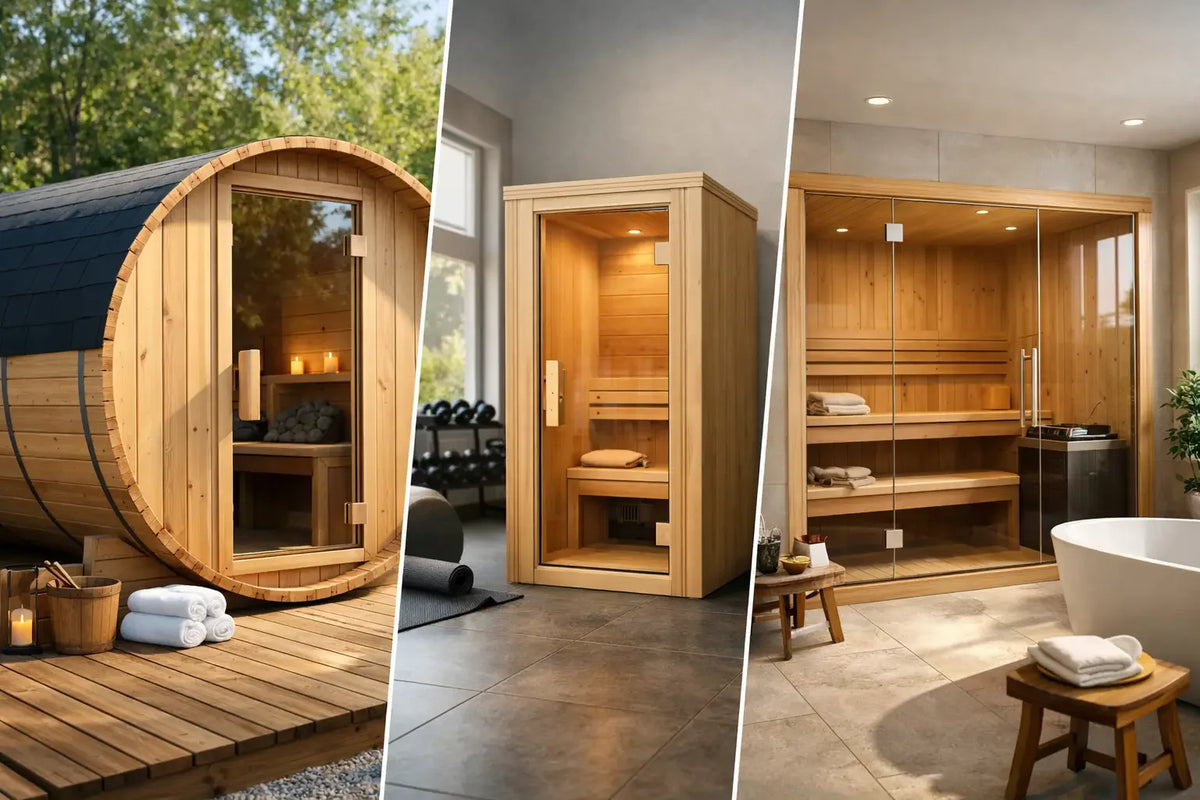
For most households, the choice lands in one of three ranges: compact one-person, versatile two-person, or social three- to four-person. The right fit depends on frequency, body size, preferred sauna posture, and whether you want the experience to be solitary or shared.
One-person saunas: a focused daily ritual
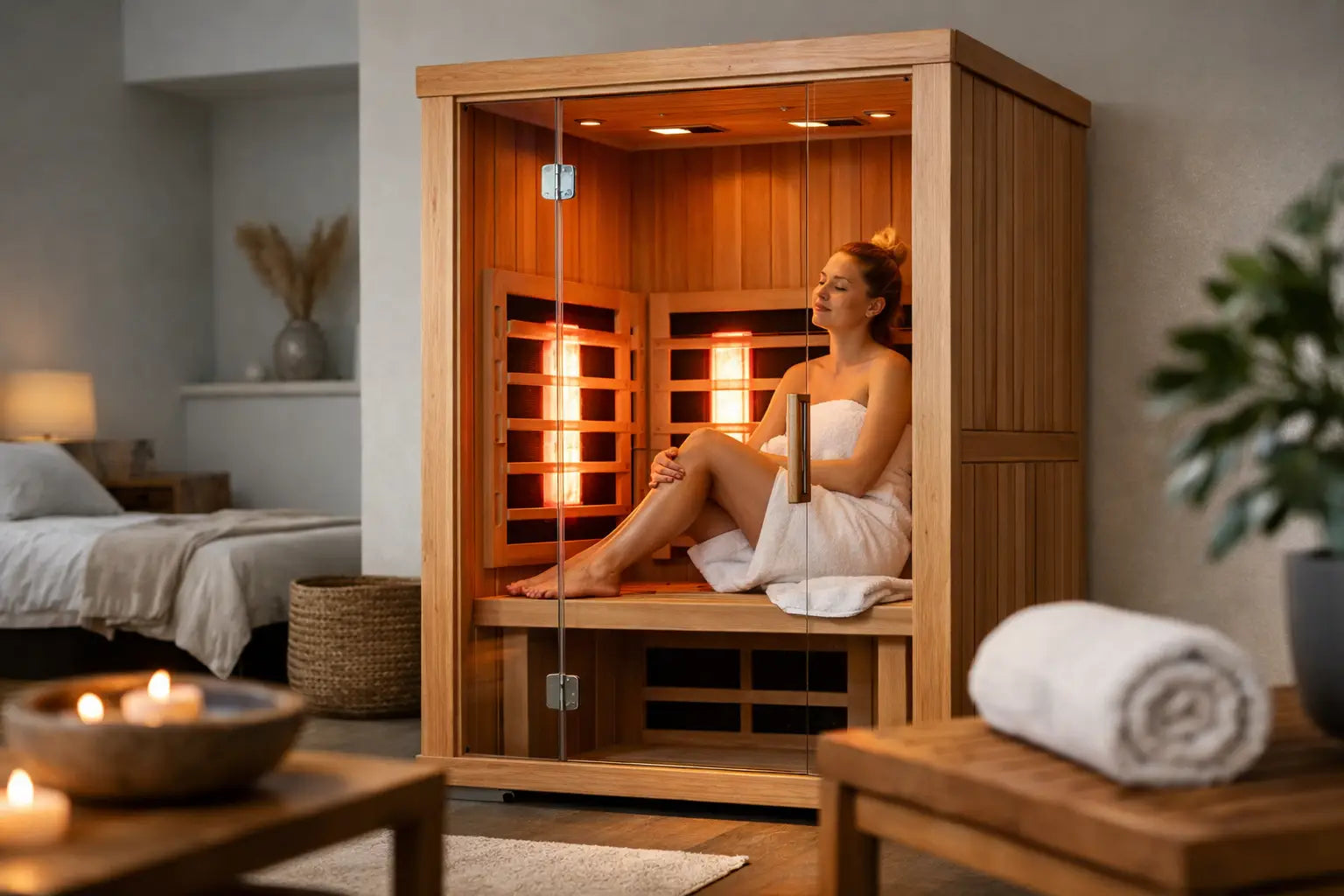
A one-person infrared sauna often has a footprint around 3 by 3 feet, though exact dimensions vary by design and heater configuration. It is a thoughtful choice for a bedroom, home office, primary-bath suite, or dedicated recovery corner where square footage is limited.
This size works especially well for someone who wants consistency. You can step in after a morning workout, between meetings, or before bed without waiting for a larger cabin to heat. The trade-off is flexibility. There is little room to stretch out, change positions, or invite another person in, so it is best for a truly personal practice.
Two-person saunas: the most adaptable home choice
A two-person sauna is often the sweet spot for couples and homeowners who want options. Many models occupy roughly 4 by 4 to 5 by 5 feet, making them manageable in a finished basement, gym, larger bathroom, or covered outdoor area.
Even when you use it alone, the added interior room changes the feeling. You can sit cross-legged, lean back, or bring a towel, water, and a small aromatherapy accessory without making the cabin feel cluttered. For two people, look closely at the interior bench measurement rather than assuming the capacity label guarantees a relaxed fit.
If your goal is a premium everyday wellness space rather than a group entertaining feature, this is usually the size to consider first.
Three- and four-person saunas: room for recovery and connection
Larger cabins generally begin around 5 by 6 feet and can extend well beyond that, particularly with outdoor traditional and barrel saunas. They are suited to families, frequent shared sessions, and homeowners creating a complete recovery room alongside a cold plunge, shower, or fitness area.
The appeal is clear: more elbow room, the ability to lie down in some layouts, and a setting that encourages connection. Yet a larger sauna requires more than extra floor space. It may need a dedicated electrical circuit, higher-voltage service, stronger ventilation planning, and a more deliberate installation path. It also takes longer to heat and carries a higher upfront investment.
Choose this category because you expect to use the space with others, not simply because a larger sauna feels more luxurious on paper.
Measure the Room, Not Just the Sauna
A sauna’s exterior dimensions tell only part of the story. Before choosing a model, measure the full installation area, including door swing, walking clearance, ceiling height, and the path from delivery point to final location. A unit that fits neatly on a floor plan can become impractical if it cannot clear a hallway turn or if its door opens into a tight passage.
Leave breathing room around the sauna according to the manufacturer’s installation requirements. Indoor cabins commonly need enough access for assembly, electrical connection, and routine cleaning. Outdoor models need a level, stable base that can support the sauna’s weight and protect it from standing water. A concrete pad, pavers designed for the load, or a structurally sound deck may be appropriate depending on the sauna and site.
Ceiling height deserves special attention. Many indoor saunas are designed for standard residential ceilings, but ventilation, lighting, and top clearance can still affect placement. In a basement, account for ducts, soffits, sprinklers, and low beams before you commit to a larger cabin.
Then consider the room around the room. A sauna feels more restorative when you have a nearby place to cool down, hydrate, hang towels, and sit quietly afterward. A compact sauna with a graceful transition space often creates a better ritual than an oversized cabin squeezed into a corner.
Interior Space Matters More Than Seat Count
When comparing models, ask how you like to sauna. Some people prefer an upright, meditative posture. Others want to lean back after a run, stretch gently, or alternate positions during a longer session. Traditional saunas may offer tiered benches, while infrared cabins often emphasize seated comfort and full-body panel coverage.
Bench depth, back support, and legroom have a direct effect on how often you will use the sauna. If you are tall, check the interior height and diagonal legroom, not just the footprint. If mobility is a consideration, a wider entry, lower threshold, and accessible bench height can matter more than an extra seat.
For shared use, remember that comfort is not only physical. A slightly larger cabin gives each person a sense of personal space, which can make a regular recovery ritual feel calm rather than cramped.
Match the Size to Your Sauna Type
Infrared, traditional, steam, and outdoor barrel saunas use space differently. An infrared sauna is often more compact and may be easier to place in a finished interior because it does not require the same kind of high-heat room construction as a traditional sauna. Still, electrical requirements vary, especially as size increases.
Traditional saunas are valued for enveloping heat, the option of water on sauna stones when designed for it, and a more communal atmosphere. They generally demand more planning for heater clearance, heat protection, ventilation, and electrical service. A larger traditional sauna can be deeply rewarding, but it is not a casual plug-and-place purchase.
Outdoor barrel saunas use their curved shape efficiently and bring a distinct retreat-like presence to a backyard. Their round walls reduce some corner space, so compare usable bench length and interior diameter rather than judging capacity from the exterior silhouette. Think, too, about the walk from the house in winter, privacy from neighbors, lighting, and where you will cool down after a session.
Steam rooms are their own category. They require waterproof construction, drainage, vapor management, and carefully planned materials. If you are considering steam, the room size must be coordinated with the generator and installation design from the start.
Do Not Forget Power, Heat, and Running Costs
The sauna that fits your floor plan must also fit your home’s infrastructure. Smaller infrared models may operate on a standard household outlet, while larger infrared cabins and most traditional saunas can require 240-volt power and a dedicated circuit. Confirm requirements before purchase, then have a qualified electrician assess your panel capacity and installation route.
Larger spaces naturally require more energy to heat, though insulation quality, ambient temperature, sauna type, and session frequency all shape actual operating costs. In an outdoor setting, cold climates and wind exposure can make thoughtful placement especially valuable. Sheltering the sauna from harsh weather while preserving ventilation and safe access supports both comfort and efficiency.
This is where expert guidance earns its place. At WellNest Home, a consultation can help connect the sauna’s dimensions and power needs to the recovery experience you want to create, before delivery day introduces preventable surprises.
Plan for the Life of the Sauna
A sauna is a long-term part of the home, not a temporary fitness accessory. Consider how your routine may change over the next several years. A solo user may later want room for a partner. A growing family may value a larger outdoor model. Or you may decide that a smaller unit, positioned steps from your shower and bedroom, is the one you will use most faithfully.
There is no prize for maximizing capacity. The best size is the one that invites you in with ease, holds you comfortably in the warmth, and leaves enough room in your home for the rest of your life to unfold around it.

Leave a comment
This site is protected by hCaptcha and the hCaptcha Privacy Policy and Terms of Service apply.