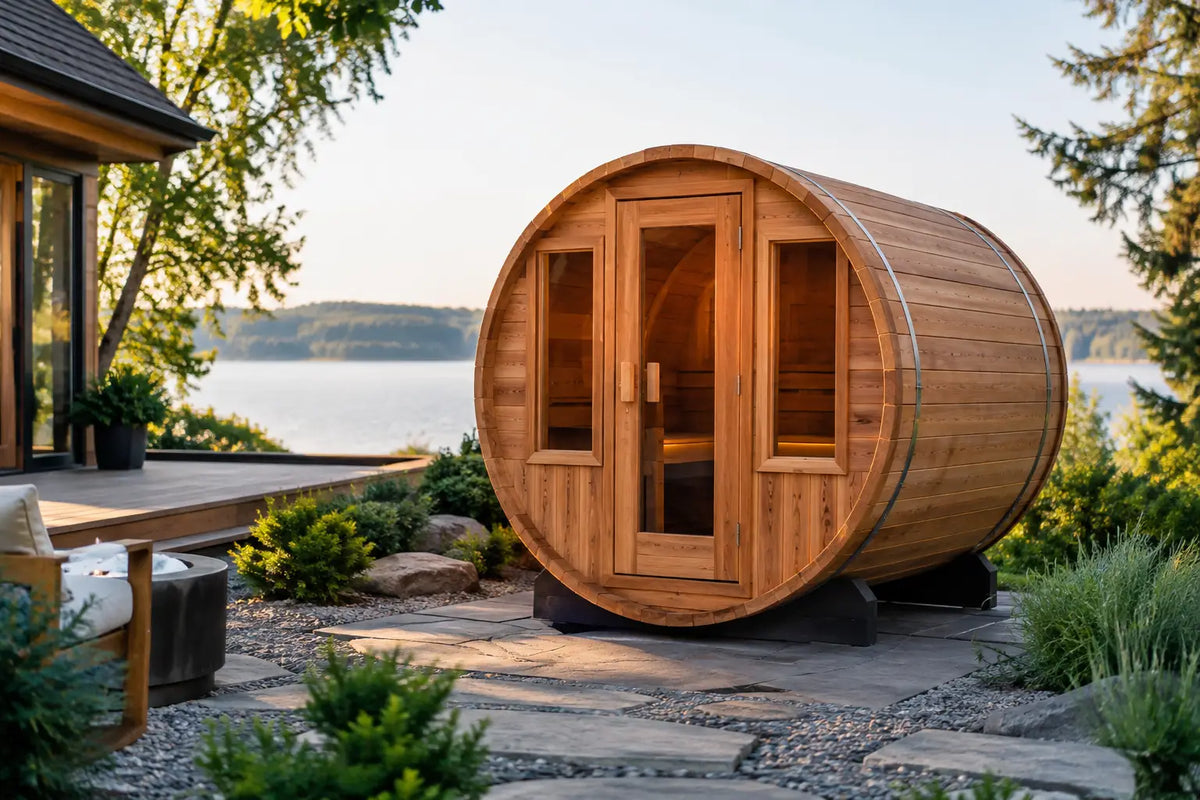
An Outdoor Barrel Sauna Review for Real Homes
A backyard sauna should feel less like another project on the property and more like a place you naturally return to after a demanding workday, a long run, or an overfull week. This outdoor barrel sauna review looks beyond the familiar curved silhouette to assess what actually shapes the experience: heat quality, materials, placement, maintenance, and whether the sauna will support a ritual you can sustain.
For many homeowners, the appeal is immediate. A barrel sauna creates a warm, cedar-scented retreat steps from the house, without dedicating interior square footage to a large wellness installation. Yet the right choice is not simply the largest model or the one with the most dramatic view. It is the one that suits your climate, household, electrical capacity, and preferred way of unwinding.
Outdoor Barrel Sauna Review: The Experience First
The defining feature of a barrel sauna is its rounded form. The curved walls reduce unused air volume near the ceiling, helping a properly sized heater warm the cabin efficiently. In practice, this can mean a pleasingly quick transition from cool outdoor air to enveloping heat, especially compared with larger, boxier cabins of similar capacity.
That shape also gives a barrel sauna its sense of occasion. A traditional sauna session asks you to step away from screens, noise, and indoor obligations. Sitting within warm timber while rain falls on the roof or evening settles across the yard can make that pause feel more complete. For homeowners building a recovery routine, atmosphere is not a superficial detail. It often determines whether equipment becomes part of weekly life or remains a beautiful but underused purchase.
A traditional heater, whether electric or wood-fired, produces a different experience from infrared heat. It warms the air and surfaces around you, allowing the room to reach the high temperatures associated with classic sauna bathing. Adding water to approved sauna stones creates steam, known as löyly, for a softer, more humid wave of heat. Those who enjoy a true hot-room ritual generally prefer this style.
The trade-off is that traditional outdoor saunas need warm-up time, and the experience varies with outdoor conditions. A well-built unit can still perform beautifully in colder weather, but a subzero morning requires more patience than a mild evening. If your priority is a short, low-heat session before work, an indoor infrared sauna may be the more convenient fit. If you want the sensory richness of heat, wood, fresh air, and a deliberate transition back to calm, a barrel sauna is difficult to replicate.
Construction Details That Matter More Than the Photo
Premium barrel saunas can look similar online. Their long-term performance often comes down to the details you cannot appreciate from a lifestyle image alone.
Choose wood for climate and longevity
Western red cedar is valued for its natural resistance to moisture and its warm aroma. Hemlock is also commonly used and can offer a clean, refined appearance, though its suitability depends on the design and finish. Thermally modified wood is another compelling option for outdoor use because the treatment improves dimensional stability and resistance to changing moisture conditions.
No wood sauna is entirely maintenance-free. Sun, rain, snow, and seasonal humidity will change its appearance over time. An exterior treatment designed for the chosen species can help preserve color and protect exposed surfaces, while the interior should generally remain free of coatings that may off-gas under heat. Expect the exterior to develop character unless you maintain it consistently.
Look closely at thickness, hardware, and roof protection
Thicker staves tend to provide a more substantial feel and better resistance to heat loss than very thin walls. Stainless steel bands and hardware are especially worthwhile in wet or coastal environments, where corrosion can shorten the life of lesser components. A quality door, secure seals where appropriate, and sturdy benches matter every time you use the sauna, not only on installation day.
Roofing deserves special attention. Some barrel designs use shingles, metal roofing, or a protective membrane over the upper curve. Others leave more of the wood exposed. In a dry, temperate setting, a simpler approach may be suitable. In a region with heavy rain, snow, or intense sun, thoughtful roof protection is a practical investment rather than an optional upgrade.
Capacity is about comfort, not a maximum headcount
A two-person barrel sauna can be intimate and efficient, but two adults may not both be able to recline comfortably. A four-person model offers more breathing room for a couple and can better accommodate family or guests, though it requires a larger foundation and more energy to heat.
Consider how you will actually use it on an ordinary Tuesday. If the sauna is primarily for solo decompression or shared evening sessions with a partner, prioritize bench depth and the ability to stretch out over a theoretical guest capacity. If you regularly host or want a family ritual, a larger model may earn its footprint.
Heater Choice Shapes the Entire Routine
An electric heater offers simple, repeatable operation. With the right electrical service and professional installation, you can preheat the sauna while you finish dinner or come home from training. Many homeowners appreciate the consistency, precise controls, and lower daily effort. For a refined home wellness space, that ease can be what turns sauna bathing into a regular practice.
A wood-fired heater is more tactile. Building the fire, tending it, and waiting for the room to warm creates a slower ritual that some people find deeply restorative. It can also be a practical choice for properties where running new electrical service would be complicated. However, it requires proper chimney clearances, dry firewood, more hands-on attention, and a greater comfort level with fire management.
Heater sizing is not a place to guess. It should account for cabin volume, glass surfaces, climate, and insulation or wall construction. An undersized heater can leave you waiting and disappointed. An oversized one can make temperature management less comfortable. This is one reason a consultation before purchase can be valuable, particularly when electrical work or a wood-fired installation is involved.
Installation Is Part of the Investment
The most successful outdoor sauna installations begin with the site rather than the product page. The sauna needs a level, stable, well-drained base, such as a concrete pad, pavers, or a properly built deck designed for the loaded weight. Avoid placing it directly on soil or grass, where moisture and movement can affect the structure.
Think through the approach in every season. Is there a clear, safely lit path from the house? Where will towels, robes, and water wait? Is there enough privacy to relax without feeling exposed? A cold rinse station, plunge tub, or simply a quiet chair nearby can extend the ritual, but none of these additions should compromise safe access or drainage.
Electrical requirements vary by heater and local code. A licensed electrician should confirm the circuit, disconnect, wiring route, and permitting needs before delivery. Wood-fired models bring their own set of clearance, chimney, and local regulation considerations. Delivery access matters, too. Some saunas arrive largely assembled, while others are delivered as kits for on-site construction. Measure gates, turns, slopes, and overhead obstructions before choosing a model.
The Real Ownership Question: Will You Use It?
An outdoor barrel sauna is most compelling when it has a clear place in your life. Perhaps it becomes a post-lift recovery ritual three evenings a week. Perhaps it is the place you and your partner leave phones behind for twenty quiet minutes. Perhaps it gives winter a gentler rhythm, offering warmth before the day begins or a reset after travel.
Its limitations are equally real. It takes outdoor space, requires maintenance, and asks for planning around installation. Traditional heat may not suit everyone, particularly those with certain medical conditions, cardiovascular concerns, pregnancy, or medications that affect heat tolerance. A clinician can offer individualized guidance when there is any uncertainty. Even for healthy adults, hydration, modest session lengths, and listening to your body matter more than chasing extreme temperatures.
WellNest Home approaches these decisions as part of a larger restorative environment, not as a one-size-fits-all upgrade. The best sauna is the one that fits the way you want to feel at home: grounded, cared for, and able to return to warmth without making recovery another task on the calendar.
Before choosing, stand in the intended spot at the time of day you expect to use it. Notice the light, the path, the privacy, and the weather. If the setting already invites you to pause, a barrel sauna can become far more than a backyard feature. It can become the small, steady place where your day finally softens.