Red Light Versus Near Infrared for Recovery
A panel can glow warmly in a quiet corner of your home, yet the light it emits is doing more than creating an inviting ritual. In the conversation around red light versus near infrared, the difference comes down to what you want to support, where in the body you hope to focus, and how you want your recovery practice to feel.
Both types of light are commonly used in photobiomodulation, a term for using specific wavelengths of light to support cellular processes. They are often paired in the same device because their strengths complement one another. Still, understanding the distinction can help you choose a panel, build a more intentional routine, and set realistic expectations for your at-home wellness space.
Red Light Versus Near Infrared: The Core Difference
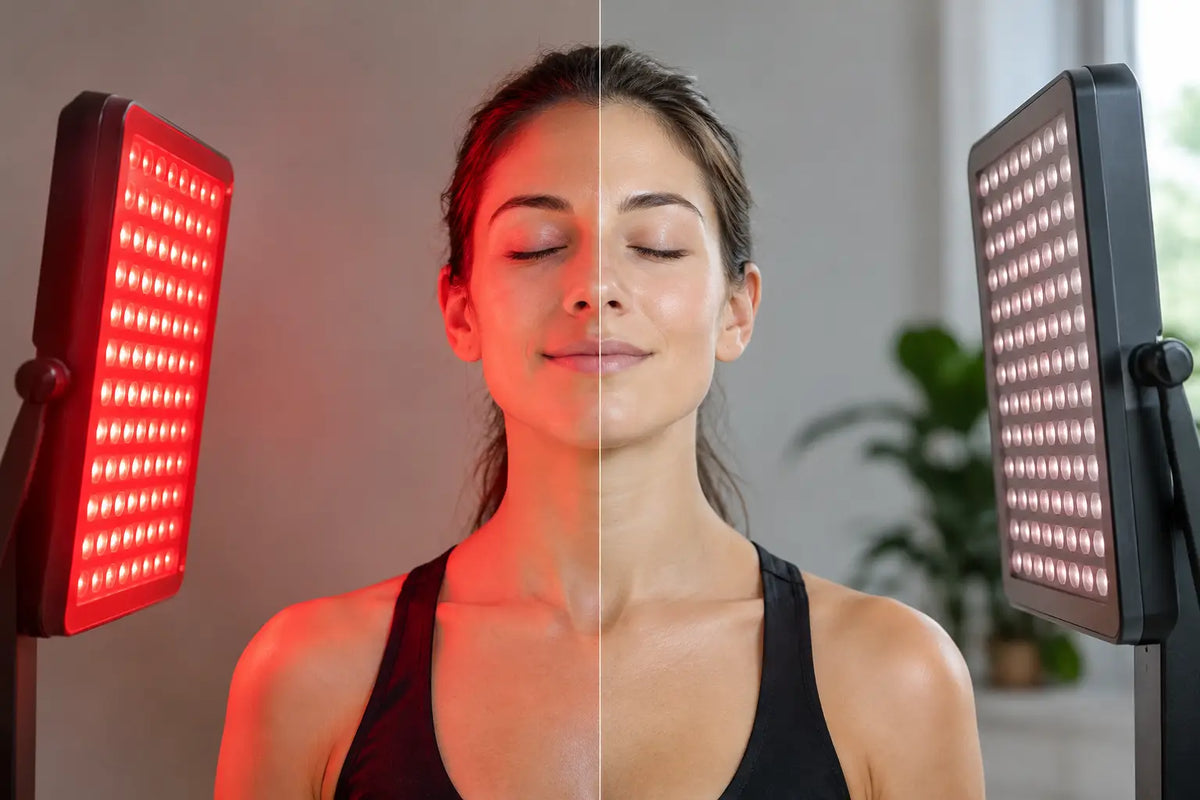
Red light is visible. It typically falls within wavelengths around 630 to 660 nanometers, producing the familiar red glow seen from many therapy panels. Near infrared light, often delivered around 810 to 850 nanometers, sits just beyond the visible spectrum. You cannot see it, though a device may appear to glow because it also includes visible red LEDs.
The practical difference is penetration. Visible red light is generally associated with more surface-level applications, making it a natural choice for those focused on the appearance and feel of skin. Near infrared light is generally understood to reach deeper into tissue, which is why it is frequently included in recovery-oriented protocols for muscles and joints.
That does not mean one is “better.” It means the right wavelength depends on the outcome you are seeking. A thoughtful home wellness ritual often includes both rather than treating the choice as an either-or decision.
When Red Light May Be the Better Fit
Red light is often chosen for facial and skin-focused rituals. Its visible wavelengths are commonly used to support a refreshed-looking complexion and the skin’s natural collagen-related processes. For someone creating a calm evening ritual around their vanity, meditation space, or bedroom, red light can offer a gentle, restorative pause that feels both practical and luxurious.
It may also appeal to people who appreciate feedback from their device. Because red light is visible, it is easy to confirm that a panel is operating and to orient yourself at an appropriate distance. The soft glow can become part of the experience: a few quiet minutes before bed, a moment of stillness after cleansing, or a consistent signal that the workday is over.
Skin goals are rarely immediate. Like a considered skincare routine, light therapy is usually best approached with patience and consistency. Product quality, wavelength accuracy, session length, distance from the panel, and your own skin sensitivity all matter. Light is a supportive practice, not a replacement for sun protection, dermatologist guidance, or a well-rounded skincare plan.
A note on the eyes
Visible red light can feel bright, especially when you are close to a powerful panel. Follow the manufacturer’s instructions on eye protection and exposure. Comfort matters. If a session feels harsh or leaves you squinting, adjust your distance, shorten the session, or use the recommended protective eyewear.
When Near Infrared May Be the Better Fit
Near infrared is a compelling option when your ritual centers on post-workout recovery, persistent tightness, or the simple desire to return to warmth after a demanding day. Because these wavelengths are invisible and generally reach deeper than visible red light, they are often used over larger muscle groups and around joints.
Picture the moments that tend to get neglected: the shoulders that rise toward your ears after hours at a desk, the legs that feel heavy after a long run, or the lower back asking for care after travel. Near infrared can fit naturally into a recovery sequence alongside hydration, gentle mobility, breathwork, or an infrared sauna session.
The evidence surrounding photobiomodulation is promising across several wellness and recovery applications, but results are personal and research protocols vary. Device dose, wavelength, treatment area, and consistency can influence outcomes. It is wise to avoid viewing a panel as a cure for pain or injury. New, severe, or persistent symptoms deserve evaluation from a qualified healthcare professional.
Why Combination Panels Are So Common
Many premium red light therapy panels combine red and near infrared wavelengths. This design gives you flexibility without forcing your routine into a narrow category. You can use both wavelengths for a broader full-body session, select red light when your focus is more skin-oriented, or emphasize near infrared around areas that feel overworked.
Combination panels also make sense for shared households. One person may want a morning facial ritual before getting ready, while another may use the same panel after strength training. A single well-chosen device can support different rhythms without adding clutter to the home.
The trade-off is that more modes do not automatically make a device more effective. What matters is whether the panel provides clearly stated wavelengths, sensible irradiance information, reliable controls, and a design you will use consistently. A beautiful panel that becomes part of your space has value, but transparent performance specifications and safety guidance should remain central to the decision.
Choosing a Panel for Your Space and Routine
Before comparing technical specifications, begin with your ritual. If your primary goal is face and skin care, a compact device with red light capability may be enough. If you want to address your back, legs, or full body after training, a larger panel with both red and near infrared wavelengths will usually feel more practical.
Consider where the panel will live. A smaller unit can be easy to place near a desk, bedside table, or bathroom counter. A larger floor-standing or wall-mounted panel creates a more immersive experience, especially in a dedicated recovery room, home gym, or sauna-adjacent space. The best setup reduces friction. You should not need to rearrange your home every time you want a 10-minute session.
Also look beyond size. Adjustable output allows for a more tailored experience. Timers can help prevent an overly long session. Stands, mounting options, and recommended treatment distances all affect whether a panel fits comfortably into daily life. For a high-consideration purchase, knowledgeable guidance can be as valuable as the device itself. WellNest Home approaches light therapy as one part of a considered home sanctuary, not another gadget competing for attention.
How to Use Light Therapy Thoughtfully
Consistency usually matters more than chasing the longest possible session. Start with the device manufacturer’s recommended distance and duration, then give yourself time to learn what is comfortable. Many people find that several short, regular sessions are easier to sustain than occasional, overly ambitious ones.
Keep your skin clean and free of products that could increase sensitivity unless your clinician advises otherwise. If you are using a panel for your face, avoid staring directly into the LEDs. If you are treating a broader area after exercise, settle into a position you can hold comfortably rather than turning the session into another task.
Certain medications and medical conditions can increase light sensitivity. Speak with your physician or dermatologist before beginning if you take photosensitizing medication, have a light-sensitive condition, are receiving treatment for cancer, are pregnant, or have any concern about how light exposure may affect your health. Careful use is part of meaningful recovery.
The More Useful Question Than Which One Wins
Rather than asking whether red light or near infrared is superior, ask what your body and routine need most right now. Red light may suit a skin-centered ritual and a moment of visible calm. Near infrared may better align with deeper-feeling recovery after movement, travel, or long days. Together, they can create a more versatile practice that meets you in different seasons of life.
Choose the light that makes it easier to keep a promise to yourself: a few quiet minutes, repeated often, in a space designed to help you feel restored.