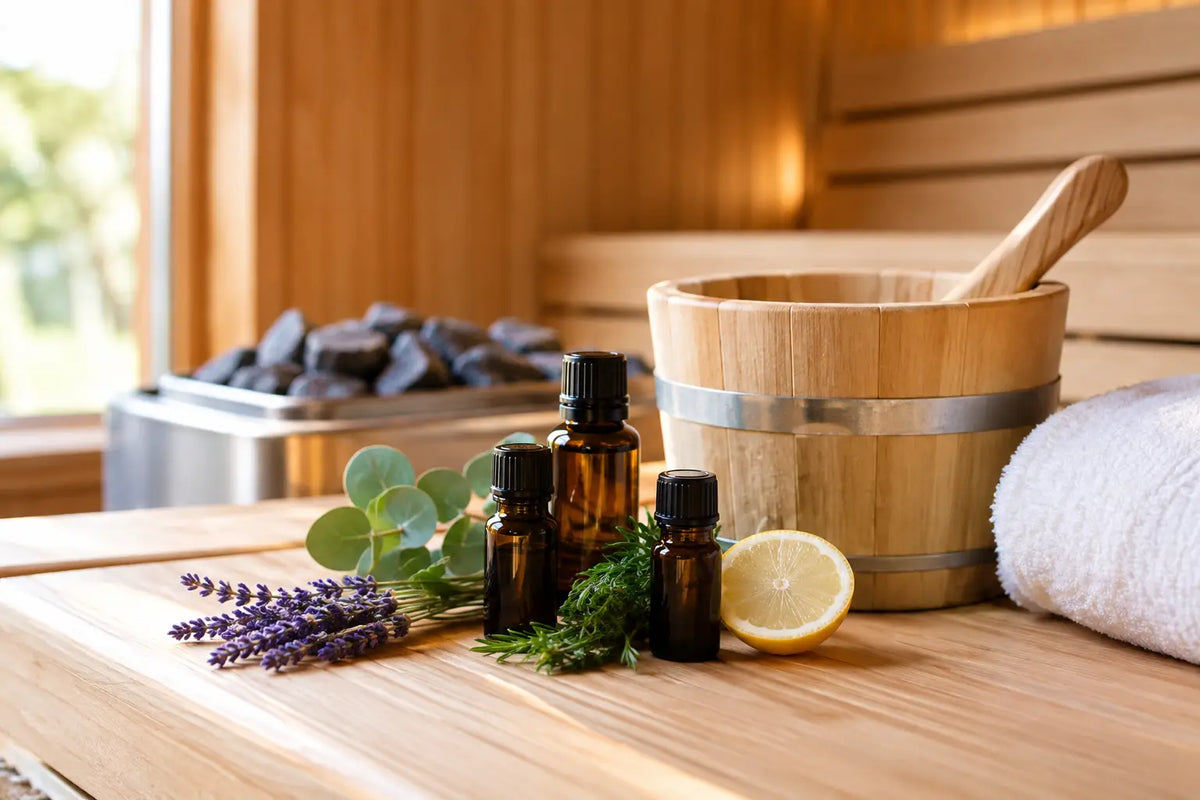
Aromatherapy Oils for Sauna, Used Safely
A well-designed sauna ritual engages more than heat. The cedar-like warmth of the room, the rhythm of your breath, and a carefully chosen scent can signal that the demands of the day are over. Aromatherapy oils for sauna use can make that transition feel more intentional, provided they are selected and used with the same care you would give any part of your recovery routine.
Essential oils are highly concentrated botanical extracts, not simply pleasant fragrances. In a hot environment, a small amount goes a long way. The goal is not to fill the room with perfume, but to create a clean, subtle sensory layer that supports the feeling you want to carry into your session: clarity, ease, or quiet restoration.
Why scent changes the sauna experience
Heat naturally encourages you to slow down. A well-chosen aroma can give that pause a purpose. Eucalyptus may feel crisp and open after a long workday or demanding workout. Lavender can soften the edges of an evening wind-down. Citrus notes bring a bright, fresh character to a morning session, while pine, fir, and other forest-inspired oils make an indoor sauna feel more connected to nature.
The effect is personal. One person may find peppermint energizing; another may find it too sharp in a high-heat setting. Rather than choosing an oil based on a broad promise, begin with the atmosphere you want to create and test it at a low concentration. Your sauna should feel like a sanctuary, not an overpowering treatment room.
There is also a practical distinction between genuine essential oils and synthetic fragrance oils. For sauna use, choose a high-quality essential oil or a sauna-specific aromatic blend from a transparent maker. Fragrance oils can contain ingredients that are not intended for heated air or skin contact. A clear ingredient list and simple botanical naming are good signs that a product has been thoughtfully formulated.
Choosing aromatherapy oils for sauna rituals
Start with one oil at a time. This makes it easier to understand what suits you and prevents a blend from becoming muddy or too intense in the heat. Once you know your preferences, two complementary oils can create a more layered ritual.
For a clear, refreshed feeling
Eucalyptus, peppermint, rosemary, and tea tree are often chosen for a brisk, spa-like aroma. Eucalyptus offers the classic sauna character many people recognize immediately. Peppermint is more piercing, so it benefits from a particularly light hand. Rosemary has a green, herbaceous quality that feels focused and grounding without being heavy.
These oils can be especially appealing after exercise, but timing matters. A very stimulating scent late at night may work against an otherwise restful evening. If your intention is sleep, reach for something softer.
For an evening reset
Lavender, cedarwood, Roman chamomile, and sweet orange create a calmer sensory profile. Lavender is familiar for good reason: it is gentle, floral, and easy to pair. Cedarwood adds depth and warmth, while sweet orange keeps a relaxing blend from feeling overly sleepy or medicinal.
Try lavender with cedarwood when you want the sauna to feel cocooning and quiet. Pair lavender with a small amount of sweet orange if you prefer a lighter, more luminous finish.
For a forest-inspired sauna
Pine, fir needle, spruce, and juniper can bring the character of a Nordic-style retreat into a home sauna. These aromas are resinous, green, and beautifully suited to wood interiors. They also tend to feel less conventionally floral, which makes them an excellent option for shared wellness spaces.
Because conifer oils can be potent, use them sparingly. A restrained scent often feels more luxurious than a stronger one, especially as the room heats up.
The safest way to use sauna oils
Never apply undiluted essential oil directly to your skin before entering a sauna. Heat and perspiration can increase irritation, and oils such as peppermint, cinnamon, clove, and citrus may feel far more intense than expected. Essential oils should also never be poured directly onto hot stones, heating elements, a sauna stove, or wood surfaces.
For a traditional sauna, the most common method is to add essential oil to the water used for steam, but only if your sauna manufacturer permits it. Begin with two to four drops of oil in a full ladle or bucket of water, then use a small amount of that diluted water on the stones. Pause before adding more. The aroma will bloom quickly as the water vaporizes.
Electric sauna heaters require additional caution. Oil can leave residue, create smoke, or affect components if it comes into direct contact with the heater. Follow the heater and sauna instructions first, even if you have used oils in another type of sauna without issue.
Infrared saunas are different. They do not rely on water over stones, and oils should not be placed on emitters, panels, or heaters. If you want aroma in an infrared sauna, use a manufacturer-approved diffuser or place a lightly scented, diluted sauna towel nearby, away from electrical components. Keep the scent gentle, since smaller infrared cabins can concentrate aroma quickly.
Steam showers and steam rooms also need model-specific guidance. Some are built with an approved aromatherapy reservoir or pump, while others are not. Do not add oils to a steam generator or water tank unless the manufacturer explicitly instructs you to do so.
A simple dilution ritual
A small ceramic or wooden sauna bucket, clean water, and one oil are enough to begin. Add three drops of essential oil to approximately one gallon of water, stir, and use that water gradually. If you are preparing only one ladle of water, one drop is often sufficient.
For an elevated but uncomplicated blend, combine two drops of eucalyptus with one drop of fir needle in a gallon of water. For an evening session, try two drops of lavender and one drop of cedarwood. These are starting points, not rules. If the aroma feels strong outside the sauna, it will likely be too strong once the heat rises.
Avoid storing premixed oil-and-water solutions for long periods. Oil and water separate, and a fresh preparation gives you better control over the concentration. Wipe up spills promptly, especially on wood benches or floors, since oil can stain surfaces and make them slippery.
A few safety considerations worth honoring
Aromatherapy should make your sauna feel more supportive, never more complicated. Skip scented use if you have asthma that is triggered by fragrance, known allergies, a migraine that is sensitive to scent, or irritated skin. Anyone who is pregnant, managing a medical condition, taking medications that affect heat tolerance, or unsure whether sauna use is appropriate should consult a qualified clinician first.
Keep oils out of reach of children and pets, and avoid using them around anyone who does not welcome the scent. Ventilate the room after your session and stop immediately if you feel lightheaded, short of breath, nauseated, or irritated in the eyes or throat. Hydration, comfortable session length, and listening to your body matter more than any aromatic addition.
It is also wise to protect the materials in your wellness space. Some oils can affect finishes, plastics, and painted surfaces over time. When in doubt, diffuse aroma indirectly rather than introducing it into the sauna itself.
Let the ritual fit the day you had
The most memorable home wellness routines are not elaborate. They are repeatable. On a demanding afternoon, a restrained eucalyptus or rosemary scent may help create a clean break between work and recovery. On a quiet evening, lavender and cedarwood can invite you to stay with the warmth a little longer, then step back into the rest of your home feeling settled.
Choose one aroma, use less than you think you need, and allow the heat to do what it does best: create a protected moment to return to yourself.