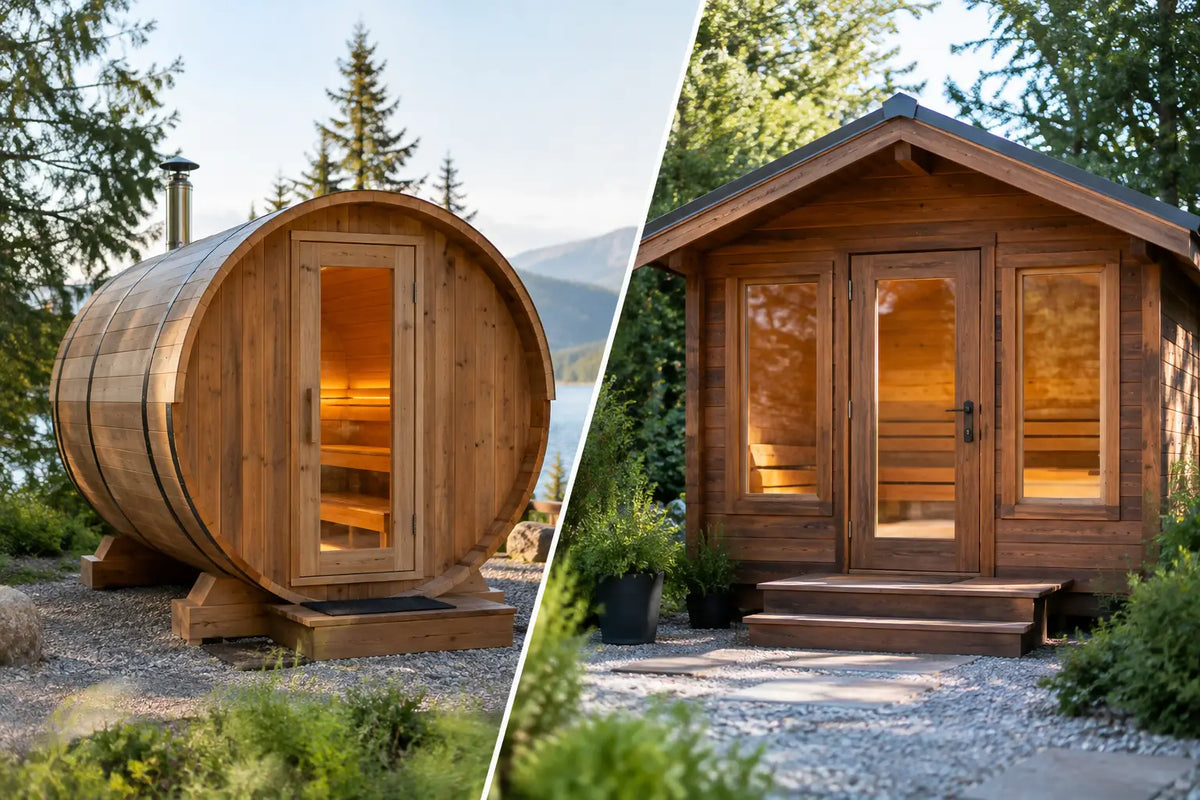
Cedar Sauna vs Hemlock for Your Home Wellness Space
A sauna’s wood does more than frame the room. It shapes the scent that greets you when you step inside, the visual calm of the space, the maintenance it will ask of you, and, in some cases, how comfortably you can enjoy a daily heat ritual. When considering cedar sauna vs hemlock, the better choice is not universal. It depends on whether you prioritize aromatic character, understated design, durability, sensitivity to fragrance, or the overall investment you want to make in your home sanctuary.
Both woods are respected sauna materials, and both can create a beautiful setting for recovery, quiet reflection, and the simple pleasure of returning to warmth. The distinction lies in their character.
Cedar sauna vs hemlock: the essential difference
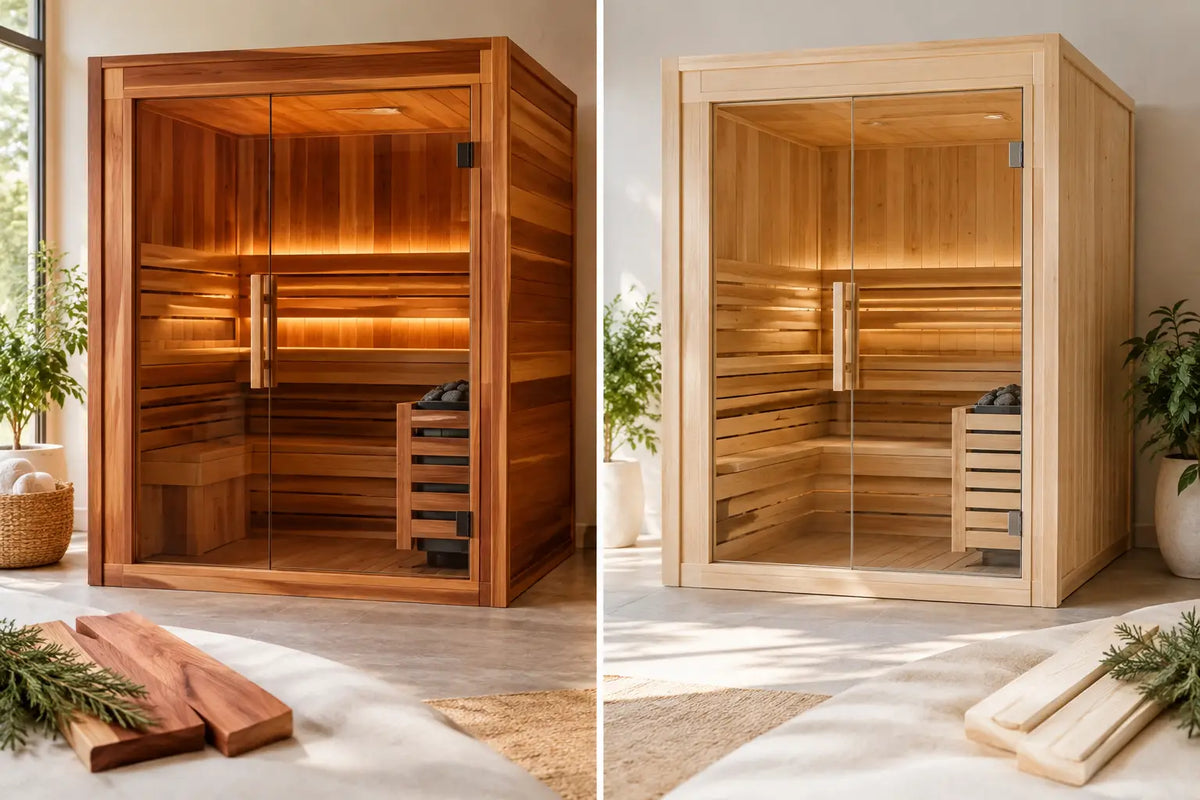
Cedar is the more traditional, sensory-forward choice. Most cedar saunas use Western red cedar, a wood known for its warm reddish-brown tones, distinctive natural fragrance, and natural resistance to moisture and decay. For many people, cedar is part of the classic sauna experience. The aroma can make an ordinary evening session feel more transportive, as though you have stepped away from the pace of home and into a private retreat.
Hemlock is quieter in appearance and scent. Canadian hemlock is typically pale blond to light honey in color, with a clean, uniform grain that suits contemporary interiors. It has little to no noticeable aroma, which can be a meaningful advantage for people who are fragrance-sensitive or who prefer their sauna to feel visually minimal and serene.
Neither material determines the wellness value of your sauna on its own. Heater quality, insulation, ventilation, construction, session consistency, and safe use matter more. But the wood determines much of the room’s personality, which matters when you are designing a ritual you will want to keep.
Why cedar remains a favorite for traditional sauna spaces
Cedar has earned its place in sauna design for practical as well as sensory reasons. Its natural oils help it tolerate humid conditions, and it is relatively resistant to rot and insect activity. In a traditional sauna where water is occasionally ladled over hot stones, that moisture resilience is especially appealing.
Its scent is equally influential. Cedar’s warm, woodsy fragrance is often associated with spa settings and outdoor retreats. If your goal is to create a deeply immersive experience - a place to decompress after demanding workdays, intense training, or restless sleep - cedar can make the room feel more ceremonial from the moment the door closes.
Cedar is also dimensionally stable, meaning it generally handles cycles of heat and humidity well when properly dried and constructed. It does not become excessively hot to the touch as quickly as denser woods, which supports comfortable bench and backrest surfaces.
There are trade-offs. Cedar is usually more expensive than hemlock, and its softer composition means it can dent or mark more easily. Its rich tone may darken over time, particularly with regular exposure to heat. Many homeowners find that evolution attractive, but those hoping to preserve a crisp, pale wood look may prefer hemlock.
The fragrance deserves thoughtful consideration, too. While many people love cedar’s scent, some find it overpowering or experience sensitivity to aromatic woods. If anyone in your household has asthma, scent-triggered headaches, known wood allergies, or a strong aversion to fragrance, a cedar sauna may not be the most comfortable long-term fit. A small scent preference can become a real barrier when the sauna is meant to be used several times a week.
What hemlock offers in a modern home sauna
Hemlock is a refined choice for homeowners who want their wellness space to feel calm, clean, and architecturally restrained. Its lighter color can make a compact indoor sauna feel more open, particularly in a home gym, primary suite, or finished basement where natural light may be limited.
Because hemlock is largely odorless, it creates a neutral canvas. You can let the warmth of the sauna stand on its own, or introduce aroma more intentionally through sauna-safe essential oil practices, if appropriate for your heater and your comfort. This flexibility is especially useful for households where more than one person will use the sauna and scent preferences vary.
Hemlock is also commonly used in quality infrared saunas. Infrared sessions generally operate at lower ambient air temperatures than traditional Finnish-style saunas and do not introduce the same direct steam exposure. In that context, hemlock’s clean finish, low odor, and accessible price point make practical sense.
That does not mean hemlock is only for entry-level spaces. Well-built hemlock saunas can look exceptionally polished. The key is evaluating the overall craftsmanship: solid wood construction, smooth bench surfaces, sturdy joinery, thoughtful ventilation, and the quality of the heating system. A beautiful wood species cannot compensate for poor construction.
Hemlock is less naturally decay-resistant than cedar, so it benefits from attentive care, particularly in high-humidity traditional saunas. Wipe down benches after use, allow the room to dry fully, and follow the manufacturer’s cleaning guidance. With proper ventilation and regular care, hemlock can serve a home wellness routine beautifully for years.
Compare cedar and hemlock by the factors that matter most
Aroma and atmosphere
Choose cedar when scent is part of the destination. Its natural fragrance adds a restorative, forest-like quality that many people expect from a classic sauna. Choose hemlock when you prefer a nearly scent-free environment, have fragrance sensitivities, or want control over any aroma you add to the experience.
Appearance and design style
Cedar brings warmth, visible grain, and a more traditional spa or cabin sensibility. It pairs naturally with stone, darker tile, and outdoor settings. Hemlock feels brighter and more contemporary. Its subtle grain complements pale walls, clean-lined fitness spaces, and modern interiors where visual quiet is the goal.
Moisture resistance and use case
For a traditional sauna that will see frequent water-on-stones use, cedar has a natural advantage because of its resistance to moisture and decay. Hemlock can still be appropriate, especially when the sauna is well designed and cared for, but cedar offers additional reassurance in a humid environment.
For infrared use, where sessions are dry and lower-temperature, the difference is less decisive. In that setting, choosing based on scent, design preference, construction quality, and budget is often the wiser approach.
Cost and long-term value
Hemlock is commonly the more budget-conscious material, helping make a premium home sauna more attainable without sacrificing a tranquil experience. Cedar typically carries a higher upfront cost. That premium may be worthwhile if its aroma, richer appearance, and moisture-resistant qualities are central to what you want from the room.
Value is not simply the purchase price. Consider the sauna you will use most willingly. If cedar makes every session feel like an escape, it may justify the investment. If you find its scent distracting and prefer a light, uncluttered space, hemlock may deliver greater value because it better supports a consistent practice.
Look beyond the wood before you choose
A cedar sauna vs hemlock decision should sit within a larger evaluation. Ask whether the unit is traditional, infrared, steam, or hybrid; where it will live; and how often you expect to use it. An outdoor sauna faces different weather demands than an indoor infrared cabin, while a shared family sauna has different considerations than a private recovery space.
Also look closely at the details you will touch every day. Bench ergonomics, interior dimensions, door placement, lighting, controls, heater capacity, electrical requirements, and ventilation can have more impact on comfort than the species of wood. For traditional saunas, ensure the heater is properly sized for the room and the installation meets local electrical and safety requirements. For infrared models, consider the placement and coverage of the heating elements rather than focusing on wood alone.
If you are particularly concerned about indoor air quality, ask detailed questions about the sauna’s materials, adhesives, finishes, and emissions testing. Solid wood panels and low-VOC construction choices may matter as much as selecting cedar or hemlock.
Which sauna wood is right for you?
Cedar is often the right fit for the homeowner who wants a classic, aromatic sauna experience and expects regular humid heat. It is especially compelling for outdoor installations and for anyone who sees the sauna as a sensory retreat rather than simply a recovery tool.
Hemlock is often the right fit for the homeowner who values a clean visual aesthetic, low fragrance, and a more approachable investment. It is a natural match for contemporary indoor spaces and for infrared sauna users who want the room to feel calm without a strong wood aroma.
There is no need to choose based on tradition alone. Your sauna should support the way you actually restore: after a morning workout, between meetings, at the end of a long week, or in the quiet minutes before bed. Choose the wood that makes that return feel inviting enough to become part of your life.