Article: Barrel Sauna vs Cabin for a Restorative Home
Barrel Sauna vs Cabin for a Restorative Home
The decision between a barrel sauna vs cabin sauna often comes down to more than footprint or curb appeal. It shapes how you return to warmth after training, how easily you can share the ritual with family, and how naturally the sauna belongs in your outdoor sanctuary. Both styles can create a deeply restorative traditional sauna experience. The right one is the model that supports the way you want to recover, gather, and slow down at home.
A barrel sauna offers sculptural simplicity and efficient heating in a compact form. A cabin sauna creates a more spacious, architectural retreat with greater design flexibility. Neither is universally better. Your climate, available space, preferred seating, and long-term vision for your wellness space all deserve a place in the decision.
Barrel Sauna vs Cabin: The Core Difference
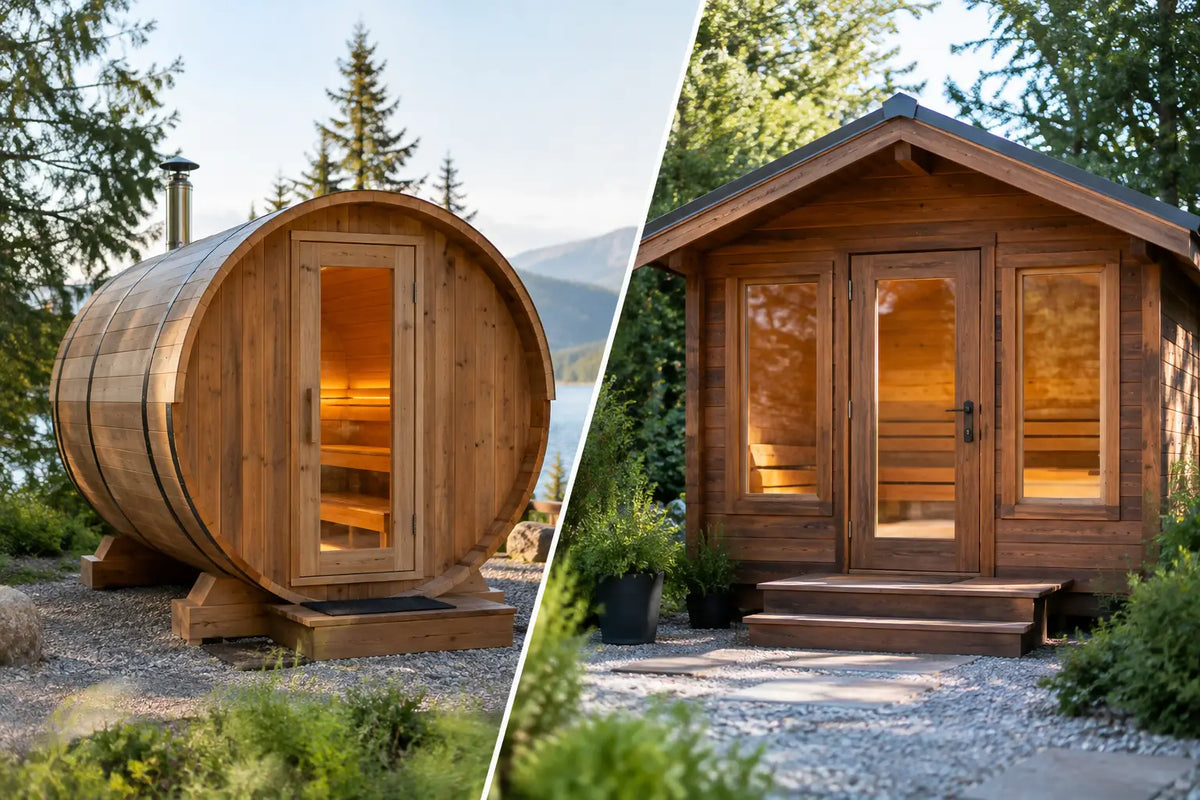
The most visible difference is the structure. Barrel saunas use curved staves that form a cylindrical shape, while cabin saunas are built with straight walls and a more conventional room-like layout. This construction affects heat circulation, usable interior space, installation requirements, and the experience of sitting inside.
A barrel sauna’s curved ceiling leaves less empty air to heat. Warm air circulates efficiently around the rounded interior, helping many barrel models reach a satisfying traditional sauna temperature relatively quickly. Their distinctive profile also makes a powerful visual statement, especially beside a pool, garden, patio, or cold plunge.
A cabin sauna has vertical walls, a flat or gently sloped roof, and a rectangular interior. That geometry creates more headroom at the edges, more consistent bench options, and a roomier feeling for multiple bathers. If your sauna will become a regular gathering place, the added usable space can be meaningful.
Choose a Barrel Sauna for Efficient Heat and Organic Style
For homeowners drawn to an outdoor sauna that feels both grounded and elevated, a barrel design is often compelling. Its wood-forward shape softens a landscaped setting rather than competing with it. Set among evergreens, near a quiet deck, or beside a cold plunge, it can make the act of recovery feel like a destination rather than another item on a to-do list.
Heat-up time and circulation
Because a barrel sauna has less overall air volume than a similarly sized cabin, it can heat efficiently. The curved walls also encourage warm air to circulate rather than collect in sharp upper corners. With a properly sized electric or wood-burning heater, this can mean less waiting between a demanding day and a restorative session.
That said, fast heat-up depends on more than shape. Outdoor temperature, insulation, heater output, door fit, and whether the sauna is preheated regularly all matter. In a cold northern climate, a well-insulated cabin with the right heater may perform just as reliably as a barrel sauna. The barrel’s efficiency is an advantage, not a substitute for quality construction.
Footprint and installation
Barrel saunas are usually delivered as assembled units or as manageable kits, which can simplify installation. Their compact form is a strong fit for homeowners with a modest patio, a side yard, or a dedicated recovery corner near a home gym.
You will still need a stable, level foundation. Gravel pads, concrete pavers, concrete slabs, or reinforced decks may work depending on the sauna’s weight and local conditions. Plan for electrical service if you select an electric heater, safe clearances around a wood-burning stove if applicable, and a route that allows delivery crews to place the unit without damaging landscaping.
Where barrel saunas ask for compromise
The same curvature that makes a barrel sauna efficient also reduces usable space near the walls. Taller bathers may notice the ceiling slope when moving around. Bench layouts can be less flexible, and the upper bench may not offer the broad, lounge-like dimensions available in a larger cabin model.
Barrel saunas are ideal for one to four regular users, depending on the model. If you picture long weekend sauna sessions with several friends or want room to stretch out after strength training, it is worth sitting with the question of space before choosing the smaller silhouette.
Choose a Cabin Sauna for Space and Flexibility
A cabin sauna feels more like a dedicated room built around your wellness ritual. Its straight walls and rectangular floor plan allow for wider benches, multiple seating levels, changing areas, and, in some models, a covered porch. It can bring the comfort of a private spa to the backyard while complementing a modern home, pool house, or structured landscape design.
A more generous interior experience
Cabin designs make excellent sense for households that intend to use the sauna together. The layout gives people more room to enter, change positions, and sit comfortably without navigating curved walls. Taller users often appreciate the upright walls and ceiling clearance, particularly when moving between lower and upper benches.
The additional space can also support a more intentional heat experience. In a traditional sauna, the upper bench is typically warmer, while the lower bench offers a gentler place to begin or cool down. A cabin sauna usually provides more freedom to create those distinct zones, making it easier for people with different heat preferences to share a session.
Design options that grow with your routine
Cabin saunas tend to offer more architectural flexibility. You may be able to choose between larger windows, insulated walls, porch space, changing areas, additional bench configurations, or a layout that aligns with the sightlines of your home. For a property where outdoor wellness is becoming a lasting lifestyle feature, that flexibility can justify the larger footprint and investment.
A cabin sauna can also feel more practical in regions with severe weather. A fully insulated structure with a well-designed roof may be particularly appealing where snow loads, wind, and extended cold seasons are part of daily life. Specific weather readiness depends on the model and installation, so review construction details rather than assuming every cabin sauna is equally insulated.
The trade-offs of a cabin design
More space requires more planning. Cabin saunas generally need a larger, carefully prepared foundation and may involve more site work, delivery coordination, or assembly than a barrel model. They also have more air volume to heat, which can extend warm-up time and may require a more powerful heater.
This is not necessarily a drawback. If the sauna becomes a shared evening ritual, a place to transition from cold plunge to warmth, or a considered focal point in your backyard, a little more preheating can feel like part of the ceremony. But for someone who wants quick solo sessions before work, the smaller barrel may be the more natural rhythm.
Compare the Practical Details Before You Buy
When evaluating a barrel sauna vs cabin sauna, begin with the experience you want, then confirm the technical requirements. A beautiful sauna that is too small, too difficult to access, or inconvenient to heat is less likely to become part of your weekly routine.
Consider how many people will use it most often. Choose for your usual sauna session, not the occasional holiday gathering. Two people who want space to recline may be happier in a four-person cabin than a compact four-person barrel.
Think about your site from every angle. Measure the foundation area, delivery path, clearance from structures, tree cover, drainage, and privacy. If you are pairing the sauna with a cold plunge, leave enough room for safe walking, towels, and a dry place to rest between rounds. A few thoughtful feet of extra space can make the entire ritual feel calmer.
Heater choice matters as much as the sauna shell. Electric heaters offer easy control and clean operation, while wood-burning heaters create a more elemental, off-grid atmosphere. Either can deliver the dry heat and gentle steam of löyly when water is placed carefully on sauna stones, provided the sauna is designed for the heater and installed according to safety requirements.
Finally, account for ownership. Natural wood needs periodic care, especially outdoors. Keep the sauna clean and well ventilated, address moisture quickly, and use exterior treatments appropriate for the wood and climate. A well-maintained sauna develops character over time while protecting the comfort and performance you invested in.
Let the Ritual Lead the Decision
Choose a barrel sauna when you want an efficient, compact retreat with a warm, organic presence outdoors. It is especially well suited to couples, solo recovery routines, and homes where available space is precious.
Choose a cabin sauna when you value generous seating, room to gather, and a more architectural wellness destination. It is often the better fit for families, frequent hosts, taller bathers, and homeowners creating a complete backyard recovery environment.
The best sauna is the one that invites you to use it on an ordinary Tuesday, not just admire it on the day it arrives. Give your routine enough room to become a ritual, and the warmth will keep calling you back.