

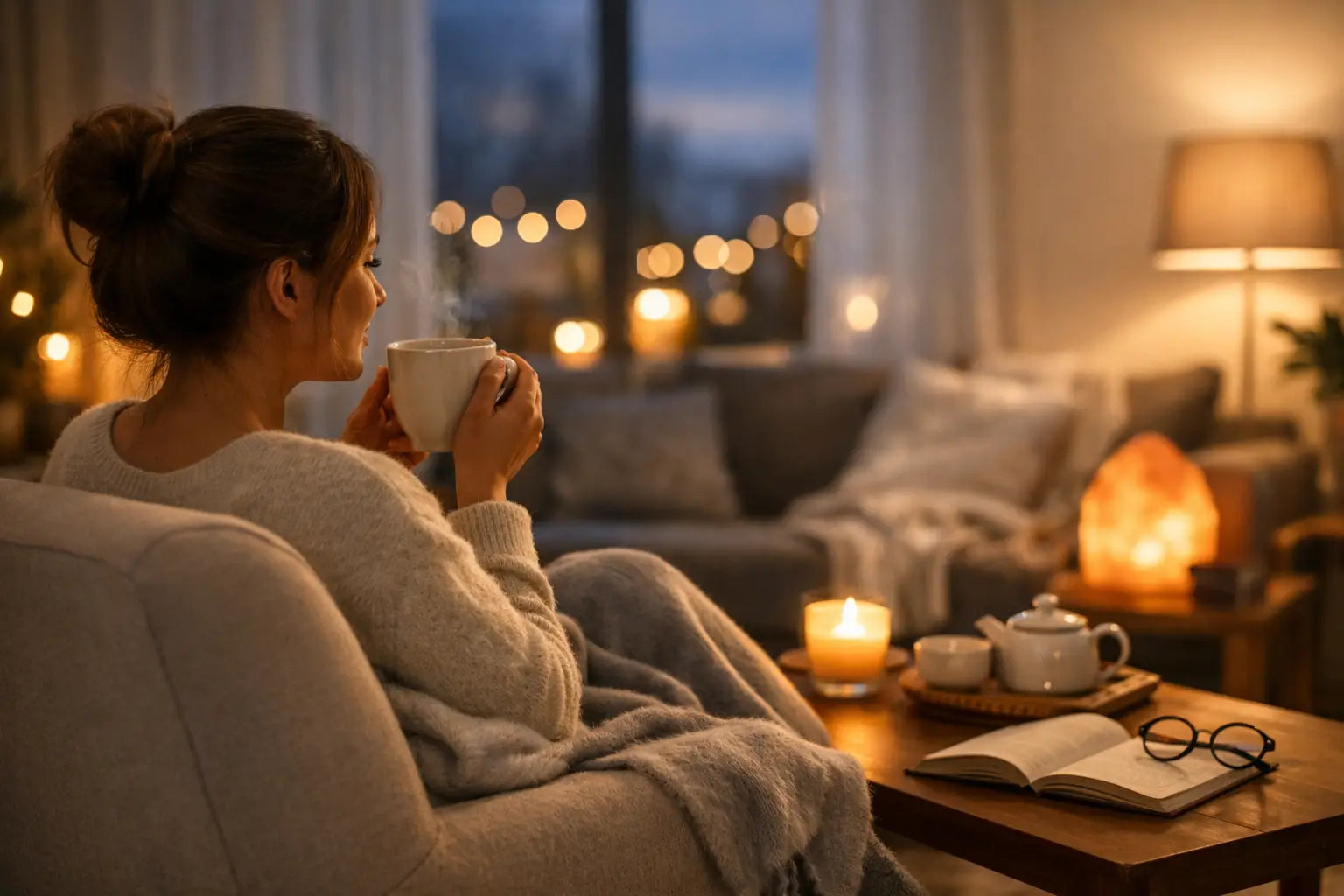
Build an Evening Relaxation Routine at Home
The moment you walk through the door is not always the moment your nervous system realizes the workday is over. Your body may still be holding a tight jaw, elevated shoulders, a racing mind, or the low-grade fatigue that comes from being available to everyone all day. An evening relaxation routine at home creates a gentler handoff: from output to restoration, from stimulation to sleep.
This does not require turning every evening into a two-hour spa appointment. The most effective rituals are repeatable, sensory, and realistic for the life you actually live. A few intentional signals, practiced in roughly the same order, can help your body recognize that it is safe to downshift.
Start Your Evening Relaxation Routine at Home With a Transition
The hardest part of unwinding is often the transition itself. Many people move directly from a screen-filled workday into cooking, scrolling, chores, or another round of messages. Instead, build a small buffer between the demands of the day and the rest of your night.
Choose one physical action that marks the shift. Change into soft clothes, wash your face, take a warm shower, or step outside for five quiet minutes before entering the flow of home. The action is less important than its consistency. Repeated often enough, it becomes a cue that tells your brain the pace is changing.
Then lower the volume of your environment. Put your phone on charge outside the bedroom if possible, silence nonessential alerts, and trade overhead lighting for a lamp or dimmable fixture. Bright light, rapid-fire information, and unresolved work tasks can keep the mind in problem-solving mode long after the workday has ended.
A transition does not erase a difficult day. It simply gives you a place to set it down before it follows you into bed.
Return to Warmth Before You Reach for Another Screen
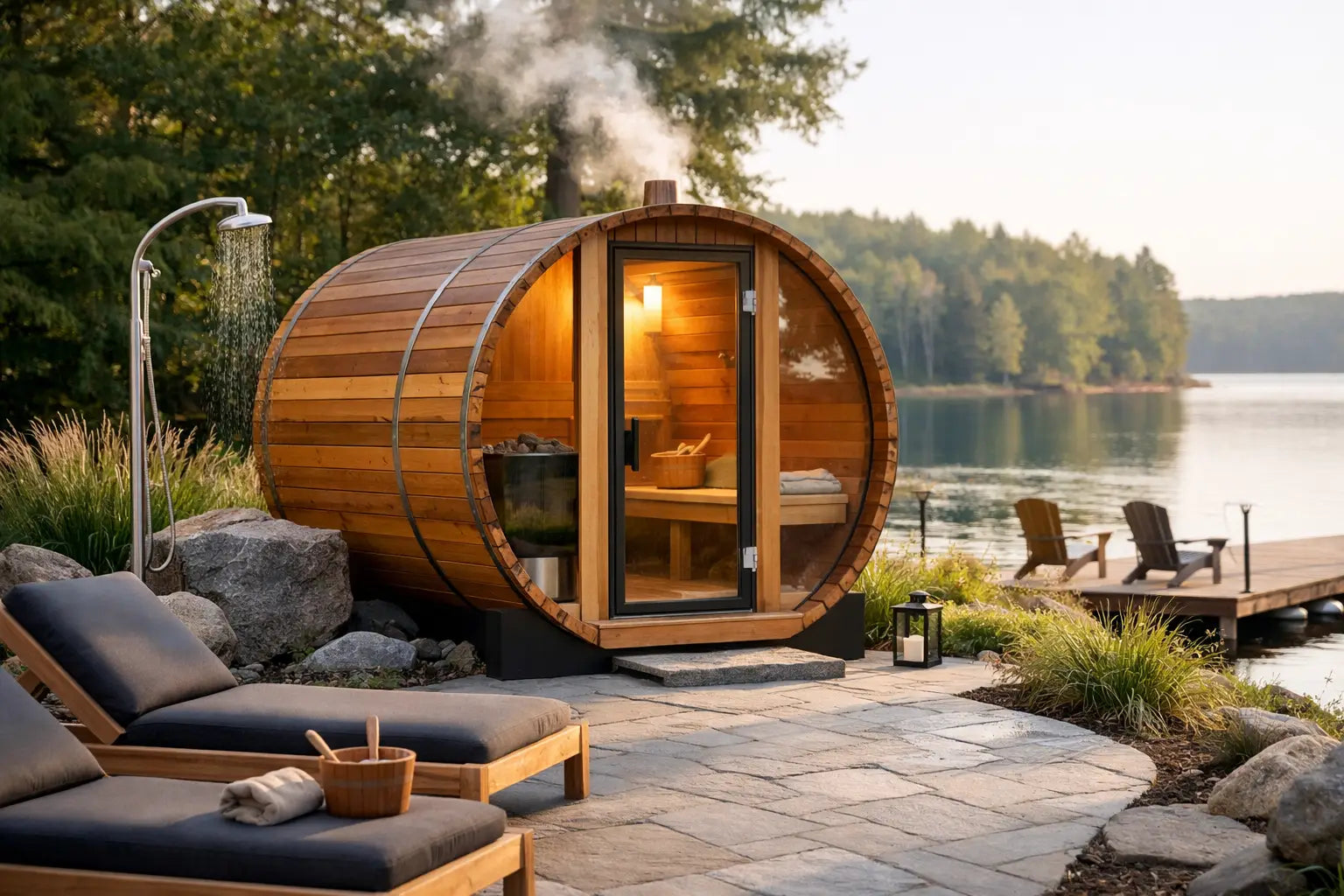
Warmth is one of the most intuitive ways to create a sense of refuge at home. A warm shower, bath, heated neck wrap, or sauna session can soften the feeling of being braced against the day. For active households, it can also become a meaningful recovery window: a pause for muscles that have carried a commute, a workout, a long flight, or hours at a desk.
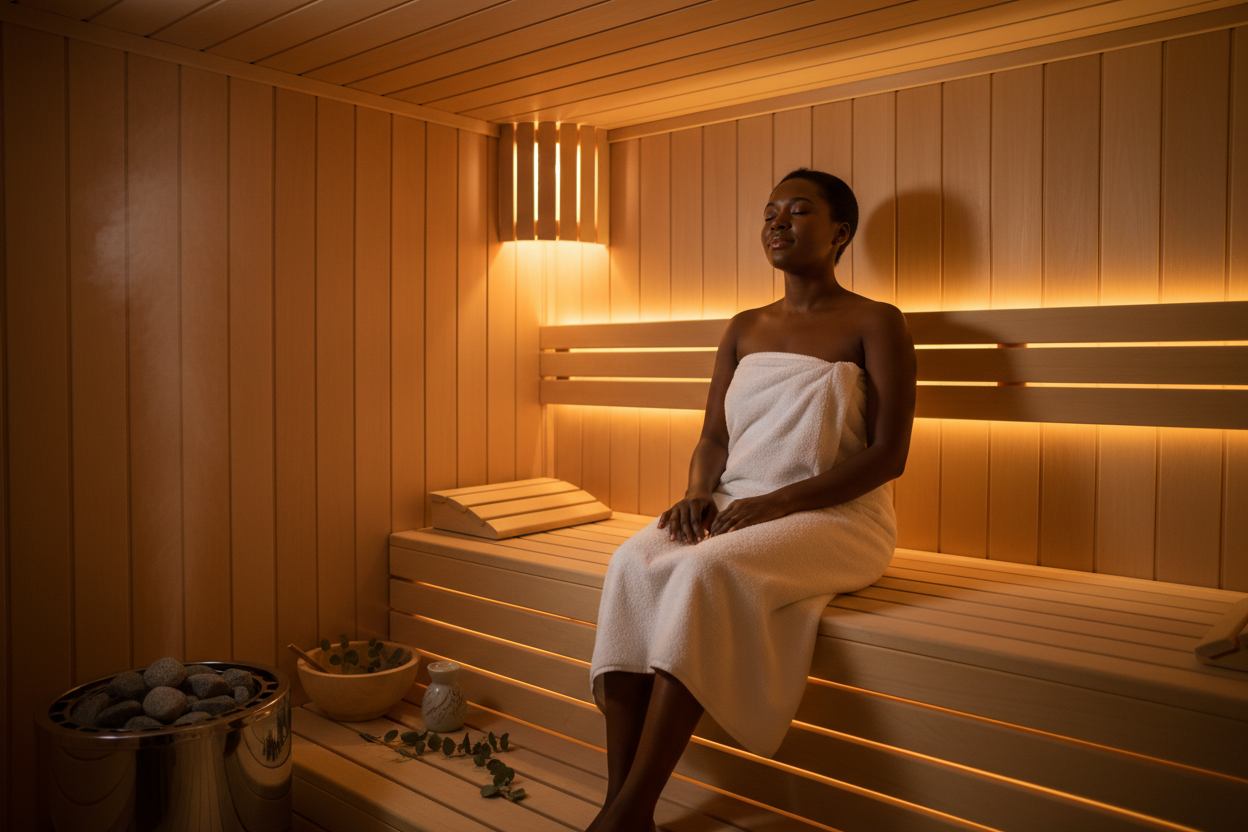
A home sauna can be especially valuable when it is treated as a ritual rather than another item on a wellness checklist. Keep the session simple. Bring water, use a clean towel, leave your phone outside, and sit long enough to notice your breath deepen. A few minutes of quiet can feel more restorative than trying to optimize every second.
The right duration depends on your experience, the sauna type, room temperature, hydration, and your health history. Start conservatively and leave the session if you feel dizzy, nauseated, unusually uncomfortable, or unwell. Those who are pregnant, managing cardiovascular conditions, taking medications that affect heat tolerance, or living with other medical concerns should speak with a qualified clinician before using heat therapy.
For some people, a shower and a cup of herbal tea will be the better choice on a particular evening. Recovery should feel supportive, not performative.
Make the Space Feel Ready for You
A ritual is easier to keep when the setting removes friction. Set out a robe, keep a carafe of water nearby, and reserve a basket for towels and recovery essentials. A few drops of a familiar aromatherapy blend can add a sensory cue, provided the scent is one you genuinely enjoy and tolerate well.
There is no need to crowd the space with products. In a premium home wellness environment, restraint often feels more calming than abundance. Choose the tools that invite you back to yourself, then make them easy to use.
Use Breath and Gentle Movement to Release Stored Tension
Once the day has slowed, your body may still need help releasing the tension it has been carrying. This is where a short sequence of breathwork and gentle movement can be more useful than an ambitious evening workout.
Try two or three minutes of slower breathing with a slightly longer exhale than inhale. For example, breathe in comfortably through the nose, then let the exhale lengthen without forcing it. The goal is not to perform perfect breathwork. It is to give your attention a steadier place to land.
Follow with movements that feel relieving rather than strenuous: neck circles, a supported forward fold, a slow spinal twist, or legs resting up on the sofa. If you train regularly, this is also a useful moment to notice whether soreness is ordinary fatigue or something that deserves more care. Pushing through every signal is not a recovery strategy.
Red light therapy may fit naturally into this portion of the evening for those who use it as part of a consistent recovery practice. Position the session before your final wind-down rather than immediately before bed if the brightness feels stimulating to you. Individual responses vary, and timing matters more than rigid rules.
Choose One Recovery Practice, Not Five
It is easy to turn wellness into another form of pressure. An evening relaxation routine at home works best when it has a clear center. On a stressful Tuesday, that may be twenty minutes of sauna warmth and a shower. After a demanding workout, it might be gentle mobility followed by a red light session. On a quiet weekend, you may have time for a longer bath, reflective journaling, and early sleep.
Cold exposure can have a place in a broader recovery practice, but it is not automatically the ideal last step before bed. Some people find a brief cold plunge clarifying and energizing, which may be better suited to earlier hours. Others enjoy it in the evening and settle well afterward. Pay attention to your own response instead of borrowing someone else’s protocol.
The same principle applies to every wellness tool in your home. The best routine is not the most elaborate one. It is the one that leaves you feeling calmer, more comfortable in your body, and more likely to return tomorrow.
Create a Softer Final Hour
The final hour before sleep should ask less of you. This is the time to lower lights, choose quiet entertainment, and move unfinished thoughts out of your head and onto paper. A brief handwritten list for tomorrow can be surprisingly effective when your mind is rehearsing everything you might forget.
Keep dinner timing, alcohol, caffeine, and late-night work in view, too. There is no universal rule that works for every schedule, but these inputs often shape sleep more than another expensive supplement. If you are hungry, choose something light and satisfying. If you need to answer one last message, do it deliberately, then close the loop rather than slipping into an hour of scrolling.
Your bedroom can reinforce the ritual. Cool air, breathable linens, minimal visual clutter, and a charger placed beyond arm’s reach make the room feel more like a sanctuary and less like a second office. The goal is not a perfectly styled space. It is a space that supports rest without asking for attention.
A Simple Rhythm to Repeat
A well-designed evening can follow an uncomplicated arc: transition out of the day, return to warmth or gentle recovery, release physical tension, then protect the final stretch before sleep. Some nights may take ten minutes. Others may make room for a fuller ritual. Consistency comes from adapting the practice to your energy, not abandoning it when life gets busy.
At WellNest Home, the most meaningful wellness spaces are built around this idea: a home should not merely contain the tools for recovery. It should make restoration feel possible on an ordinary night.
Let your routine be a quiet promise to yourself. When the day has asked for your attention from every direction, return to a space, a temperature, a breath, and a pace that remind you that rest is not something to earn.
Leave a comment
This site is protected by hCaptcha and the hCaptcha Privacy Policy and Terms of Service apply.