

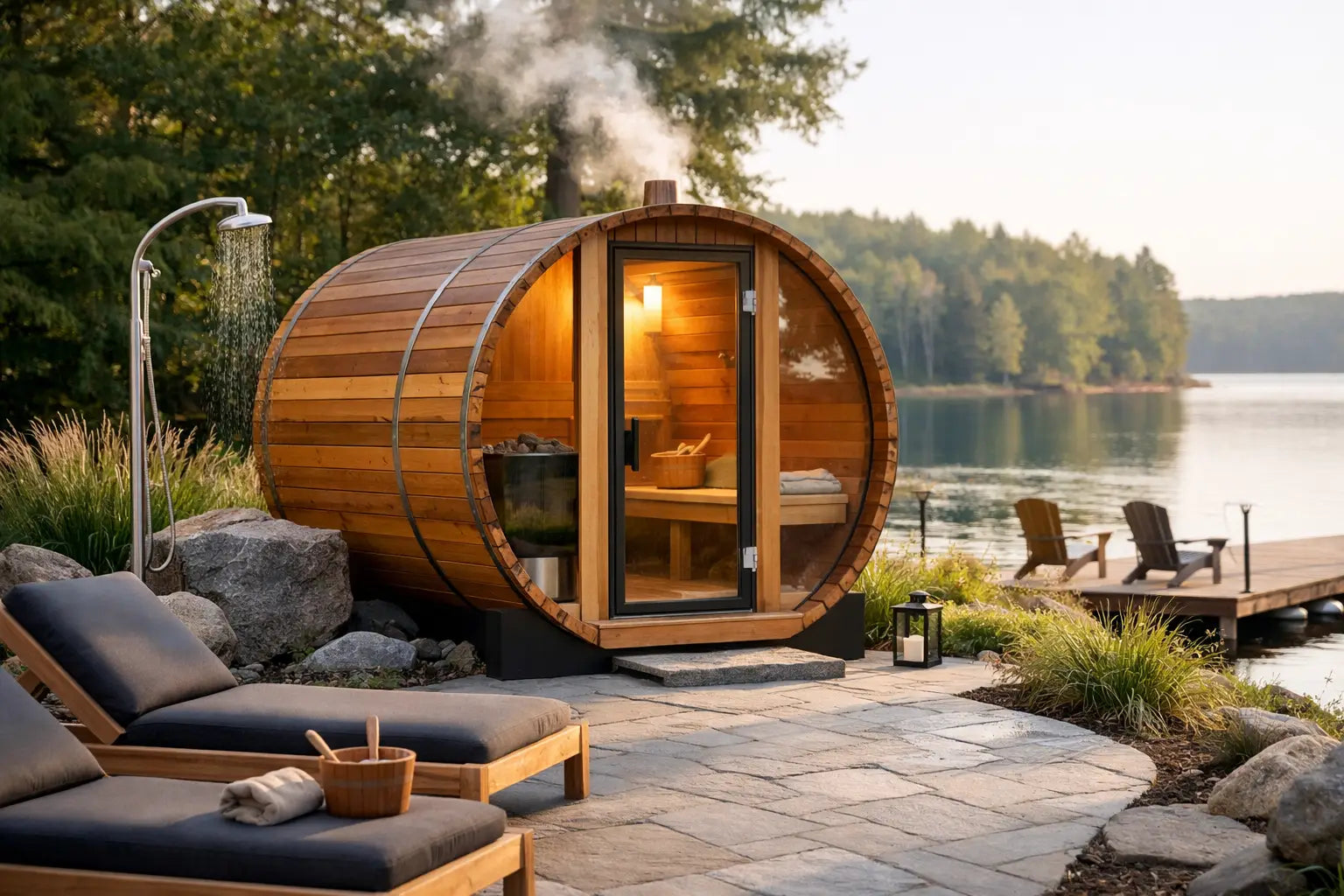
Outdoor Sauna Placement Tips for Better Rituals
A beautiful outdoor sauna can become the place where the day finally softens: a few quiet minutes of heat after training, a winter evening ritual, or a restorative pause before bed. The best outdoor sauna placement tips begin with a simple truth: the ideal location is not necessarily the farthest, prettiest corner of the yard. It is the place you will reach easily, use confidently, and return to often.
A sauna is both a wellness investment and a small piece of architecture. Its setting shapes privacy, safety, maintenance, and the feeling you experience when you step outside to return to warmth. Before choosing a model or preparing a foundation, consider how the sauna will fit into the rhythm of your home.
Start With the Ritual, Not the Empty Space
Walk through the experience you want to create. Where will you enter from? Will you use the sauna after a workout, alongside a cold plunge, or as a quiet evening reset? Where will you cool down, rehydrate, and change afterward?
For many homeowners, the most successful placement is closer to the house than expected. A short, well-lit walk makes a meaningful difference on dark or rainy nights, and convenience supports consistency. A sauna placed at the distant edge of the property may feel wonderfully secluded in summer, yet become less inviting when temperatures drop or schedules are full.
That does not mean the sauna must sit directly beside the back door. A semi-private area near a patio, pool house, garden path, or covered terrace can offer a welcome transition between home and retreat. Aim for a location that feels intentionally separate without creating unnecessary friction.
Prioritize a Stable, Well-Drained Foundation
Outdoor saunas need a level, durable base. This is not merely an installation detail. A shifting or poorly drained foundation can affect door alignment, allow moisture to collect beneath the structure, and make the surrounding area slippery over time.
A concrete pad is a common choice because it is stable, easy to maintain, and well suited to many sauna styles. Pavers or a properly engineered gravel base may also work, depending on the sauna model, soil conditions, and manufacturer requirements. The surface should be level, load-bearing, and designed to direct water away from both the sauna and your home.
Look closely at what happens after heavy rain. Low spots, soft soil, roof runoff, and downspout discharge are all warning signs. If water naturally travels toward your intended sauna site, address drainage before installation rather than trying to solve it afterward with mats or landscaping.
Leave enough room around the sauna for airflow, cleaning, and future service. Exact clearance requirements vary by model, so follow the manufacturer’s guidance. Avoid wedging the unit tightly between fences, dense shrubs, or structures where dampness can linger and access becomes difficult.
Choose Privacy That Still Feels Open
Privacy is part of what allows a home sauna ritual to feel restorative. You should be able to step in and out without feeling exposed to neighboring windows, a busy street, or the activity of the household. Still, complete enclosure is not always the answer.
Rather than placing the sauna in a dark, boxed-in corner, use layered screening. Evergreen plantings, a slatted privacy wall, a pergola, or strategically placed landscaping can create a sense of refuge while preserving light and air. Consider the view from inside the sauna as carefully as the view toward it. A glimpse of mature trees, a calm garden, or a thoughtfully designed courtyard can make even a compact backyard feel like a private sanctuary.
Check sightlines in every season. A leafy hedge may provide excellent screening in July but very little privacy in January. If your sauna includes expansive glass, the direction it faces deserves even more attention.
Plan for Power Before You Fall in Love With a Site
Electrical access is often the practical factor that narrows the field. Most outdoor electric saunas require dedicated power installed by a qualified electrician, and the route from your electrical panel to the sauna can influence both cost and placement.
A closer location may reduce trenching and simplify installation, but the shortest route is not always the best overall choice. Your electrician can assess panel capacity, required circuit specifications, outdoor-rated materials, weather protection, and local code requirements. Bring this conversation forward early, before the foundation is poured or landscaping is finalized.
Do not rely on extension cords or improvised outdoor electrical solutions. A premium sauna deserves an installation that supports safe, dependable use for years. If you are considering a wood-fired model, placement requires another level of planning around chimney clearances, noncombustible surfaces, smoke direction, fuel storage, and local fire regulations.
Let Sun, Wind, and Weather Inform the Setting
Sun exposure changes the sauna experience. Morning sun can make a space feel bright and awakening, while afternoon shade may be more comfortable in hot climates. In colder regions, some sun can help keep surrounding paths clearer and reduce the persistent dampness that encourages ice or mildew.
Wind matters just as much. A sheltered site can make the walk to and from the sauna more pleasant and help protect the building from repeated weather exposure. However, avoid creating a completely stagnant pocket where moisture has no chance to dry. Nearby trees can provide beautiful shade and privacy, but inspect for falling branches, dripping sap, root spread, and gutters that may be difficult to maintain.
Think beyond the sauna itself. The ground around it should remain safe under bare feet. A non-slip path, durable outdoor lighting, and a bench or small landing area can make the ritual feel composed rather than improvised. In snowy climates, leave space for snow removal and choose a route that will not become an icy obstacle after every storm.
Design the Arrival and Cool-Down Zone
The sauna door is the beginning of the ritual, not an afterthought. Give yourself a clean, level landing area for opening the door, setting down a towel, and moving safely in wet conditions. A few steps of thoughtful hardscaping can elevate both function and atmosphere.
If you plan to pair heat with cold exposure, keep the relationship between the sauna and cold plunge close enough to feel effortless, while leaving adequate circulation space around each unit. You will want a safe walking surface, access for maintenance, and room to sit quietly between rounds. A small covered nook for towels, water, and robes can be especially valuable, though ventilation and material selection should account for moisture.
This is also a good moment to consider sound. A sauna near an air-conditioning condenser, pool equipment, or a frequently used driveway may be convenient but less peaceful. You may not be able to eliminate every sound, yet shifting the placement a few feet or adding a landscape buffer can noticeably change the mood.
Confirm Local Rules and Long-Term Access
Before committing to a location, review local zoning, setback rules, HOA requirements, utility easements, and permit needs. Rules can vary by municipality and may depend on the sauna’s footprint, electrical work, proximity to property lines, and whether it is considered an accessory structure.
Also consider how the sauna will arrive. Can delivery access the site without removing a fence, damaging a garden, or navigating a tight turn? If assembly will happen on-site, is there sufficient working room for installers? These details are easy to overlook while imagining the finished retreat, but they can influence the best site from the start.
Plan for upkeep, too. You will occasionally need to inspect the exterior, clear leaves, manage snow, clean nearby surfaces, and service electrical components. A location that is beautiful but impossible to reach will ask more of you over time.
Make It Feel Like a Place You Chose on Purpose
The strongest outdoor sauna placement tips balance technical requirements with emotional ones. Your sauna should feel protected, accessible, and naturally connected to the way you live. It does not need an oversized yard or a dramatic view to deliver a meaningful ritual. It needs a setting that invites you outside when your body asks for recovery and your mind asks for quiet.
At WellNest Home, we encourage homeowners to view placement as part of the wellness design process, not a final installation task. A thoughtful site turns a sauna from an impressive backyard feature into a dependable place to reset. Choose the spot that makes the next session feel easy, then let the surrounding details support the calm you came outside to find.


Leave a comment
This site is protected by hCaptcha and the hCaptcha Privacy Policy and Terms of Service apply.