

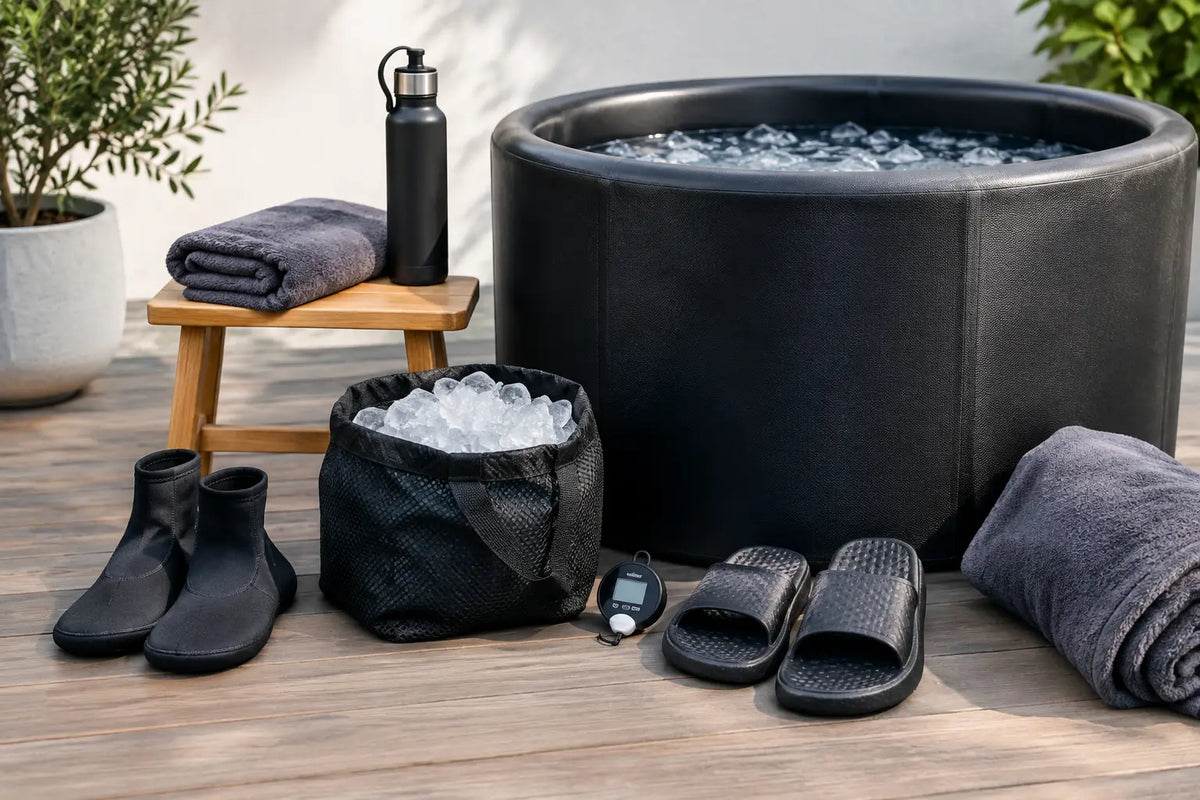
9 Best Cold Plunge Accessories for Home Recovery
A cold plunge becomes part of the home in small, telling ways: the wet footprints after a morning session, the moment you reach for a towel with cold hands, the confidence of stepping in without bracing against an unstable edge. The best cold plunge accessories are not decorative extras. They protect water quality, improve safety, and make it easier to return to a practice that can feel clear, bracing, and deeply restorative.
For a premium home setup, the goal is not to accumulate gear. It is to remove friction from the ritual. Choose accessories that suit your tub, placement, climate, household, and preferred frequency of use.
1. A fitted insulated cover
A well-made cover is one of the most valuable additions to nearly any cold plunge. It helps keep leaves, dust, pet hair, and outdoor debris out of the water while reducing evaporation and limiting unnecessary strain on a chiller. In a garage, patio, or backyard setting, it also gives the tub a more finished, intentional presence between sessions.
Insulation matters most when your plunge is outdoors or when ambient temperatures shift dramatically. A basic cover may keep debris out, but a fitted insulated model can better support temperature stability. Confirm that the cover is designed for your tub’s exact shape and that it is manageable enough to use every day. The best cover is the one that gets put back on after every plunge.
2. Water filtration and sanitation essentials
Clean water is the foundation of a pleasant cold immersion practice. Depending on the tub and chiller system, that may mean replacement filters, a skimmer, approved sanitizer supplies, or testing strips that help you monitor the water rather than guess at it.
There is no universal water-care formula. A solo user who showers before entering and keeps the tub covered will have different maintenance needs than a busy household sharing the plunge after workouts. Follow the manufacturer’s instructions for compatible chemicals and filter changes, especially if your system has a chiller or integrated sanitation feature. Using an unapproved treatment can damage equipment, irritate skin, or create water chemistry problems that are harder to correct.
A simple testing routine supports consistency. Keep supplies nearby in a dry, discreet container so maintenance feels like a natural part of caring for your space rather than a task you postpone.
3. Non-slip steps or a stable entry platform
Cold water can make even a familiar entry feel more deliberate. A stable set of non-slip steps or a purpose-built platform creates a safer transition into and out of the tub, particularly for deeper models, outdoor installations, or users with limited mobility.
Look for a wide base, weather-resistant materials, and a surface that maintains grip when wet. The platform should sit level on the ground and remain clear of standing water. Avoid lightweight decorative stools that can shift, tip, or become slippery under bare feet.
If your plunge is positioned on a deck, patio, or bathroom floor, think beyond the step itself. There should be a clear path from the tub to warmth, whether that is a shower, a sauna, a robe station, or the door back into the home. This is a small design decision with a meaningful effect on comfort and confidence.
4. A waterproof floor mat
A durable waterproof mat gives the area around the plunge a cleaner, more composed feel while helping contain drips. It is especially useful indoors, where repeated moisture can affect flooring, and outdoors, where a mat can reduce tracked-in dirt and provide a more comfortable surface for bare feet.
Choose a mat with drainage channels or a textured finish rather than a smooth surface that can hold water. Measure the footprint of your tub, steps, and standing area before ordering. A mat that is too small often leaves the most-used exit zone unprotected.
For a more elevated setup, coordinate the material and color with the rest of the recovery space. Charcoal, warm stone, natural teak tones, and soft black tend to pair gracefully with both modern and spa-inspired environments.
5. A dedicated plunge timer
A timer brings intention to a practice that can otherwise become competitive or impulsive. It is helpful for beginners learning to settle into the sensation and for experienced users who want a consistent protocol without checking a phone near water.
A large-display, water-resistant timer is usually enough. Place it where it can be read without twisting or reaching, and select a gentle audible alert rather than an aggressive alarm. Some people prefer a visual timer to keep the atmosphere quieter.
Duration is personal. More time and colder water are not automatically better. Your comfort, medical history, water temperature, and recovery goals all matter. If you are new to cold exposure, have cardiovascular concerns, are pregnant, or take medication that affects circulation or blood pressure, speak with a qualified clinician before beginning a cold plunge routine.
6. A reliable floating thermometer
If your chiller does not provide a dependable temperature display, a floating thermometer offers useful clarity. Water that feels “cold enough” can vary substantially from one day to the next, particularly in an outdoor tub exposed to sun, wind, or seasonal weather.
A thermometer helps you adjust the experience gradually and maintain a temperature range that feels appropriate for you. Seek a model built for water use with easy-to-read markings. Keep it away from moving jets or the immediate chiller return when checking temperature, as water can be cooler or warmer in those areas than in the main body of the tub.
This is a modest accessory, but it supports a more measured relationship with cold exposure. Precision encourages you to listen to your body rather than chase an arbitrary number.
7. An absorbent robe and dedicated towels
The transition out of the tub deserves as much consideration as the entry. A substantial cotton or performance-fabric robe lets you cover up quickly, while dedicated towels prevent the familiar scramble of borrowing bathroom linens mid-session.
Choose materials based on where you plunge. Thick cotton feels luxurious in a climate-controlled indoor recovery room, while a quick-drying robe may make more sense beside an outdoor tub in humid weather. Keep a hamper or ventilated basket nearby so damp textiles do not end up folded over the nearest chair.
This is also where ritual can become personal. Some homeowners keep a warm robe near a sauna door, others pair their plunge with herbal tea and a quiet seat afterward. The accessory is simple, but the message is powerful: recovery does not end the moment you leave the water.
8. A drainage hose and maintenance kit
Every cold plunge needs a practical plan for water changes. A compatible drainage hose, pump if required, and a small maintenance kit can make that work far easier. The right setup depends on your tub’s drain placement, the distance to an approved drainage area, and local rules about where water can be released.
Before buying accessories, confirm the hose diameter and connection type recommended by the manufacturer. A hose that does not seal properly creates an avoidable mess, while a short hose may force you to move equipment unnecessarily. Keep a soft brush, microfiber cloths, and non-abrasive cleaning supplies on hand for the tub’s interior and exterior surfaces.
Do not use harsh cleaners or improvised tools that may scratch the shell or leave residue in the water. A clean, protected finish keeps a premium plunge looking as restorative as it feels.
9. A storage solution for a calmer recovery zone
The final accessory is less about performance and more about presence. A compact, weather-appropriate storage bench, cabinet, or basket can hold towels, testing supplies, filters, robes, and the small pieces that otherwise collect around the tub.
A cold plunge area should not feel like equipment storage. When each item has a place, the space can remain calm enough to invite use before work, after training, or at the close of a demanding day. For homeowners building a fuller wellness sanctuary, this level of organization helps the plunge sit naturally alongside sauna, red light, or meditation rituals.
How to choose cold plunge accessories wisely
Start with the needs that protect the experience: water care, a cover, safe footing, and drainage. Then add the comfort pieces that make the practice easier to repeat, such as a robe, timer, and storage solution. Accessories should support your routine, not turn it into another project.
At WellNest Home, a restorative space is considered as a whole - from the quality of the equipment to the quiet details that make you want to return. Begin with one thoughtful upgrade, place it within easy reach, and let your cold plunge become a steadier pause in the rhythm of home.
Leave a comment
This site is protected by hCaptcha and the hCaptcha Privacy Policy and Terms of Service apply.